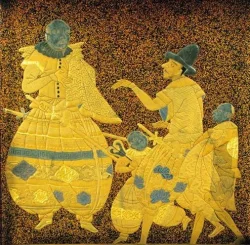
Sasaki Kojirō
Sasaki Kojirō is remembered as the swordsman defeated by Miyamoto Musashi in one of Japan’s most famous duels. The encounter, traditionally dated to 1612 and placed on the small island of Funashima, has inspired centuries of stories, plays, books, and films. Yet the historical record about Kojirō is remarkably thin: his birth date, origins, and even the personal name by which he is now known remain uncertain.
A Swordsman Known as Ganryū
Kojirō is associated with the name Ganryū, which is also used for the sword school linked to him. Later accounts describe him as a skilled practitioner who favored an unusually long sword. His weapon became known in popular retellings as the “Drying Pole,” and he was credited with a technique called *Tsubame-gaeshi*, or “Swallow Reversal.”
The technical details of that move do not appear in the earliest surviving evidence. As with many early Japanese martial artists, details about his training and teachers are drawn from later accounts that blend historical memory with legend. What can be said with confidence is that later generations remembered him as a formidable swordsman and rival worthy of Musashi.
The Duel on Funashima
A memorial inscription erected in 1654 by Musashi’s adopted son records that Musashi fought and killed a master of swordsmanship called Ganryū on Funashima. This is among the most important early sources for the encounter. The inscription does not use the name Sasaki Kojirō or give the dramatic details familiar from popular stories.
Later biographies and traditions identify Ganryū as Sasaki Kojirō and place the fight in 1612. They add that Musashi arrived late and used a wooden sword carved from an oar to defeat his opponent. These details have become part of the duel’s enduring drama, but they appear in sources written much later and cannot all be verified.
The island of Funashima is now commonly called Ganryū-jima because of its association with the fight. The story’s setting between the islands of Kyushu and Honshu, and the clash between two renowned sword masters, helped turn an encounter with limited documentary evidence into a defining episode in Japanese martial culture.
From Historical Figure to Legend
Kojirō’s fame has always been tied to Musashi’s. Musashi’s own later reputation as a swordsman and author of *The Book of Five Rings* ensured that the duel remained central to his biography. Kojirō, in turn, became the ideal rival: a master associated with the long sword and a distinctive technique, whose defeat gave the legend its dramatic finish.
His image has appeared in theater, novels, film, and popular culture, often with his biography filled out far beyond what the early sources establish. The contrast between the sparse historical record and the richness of later storytelling is part of his fascination.
Legacy
Sasaki Kojirō remains one of Japan’s best-known swordsmen, even though little can be firmly established about his life outside the duel tradition. The earliest record preserves the core of the story—a master called Ganryū fought Musashi on Funashima and was killed—while later generations supplied a name, a date, and a vivid dramatic scene.
His legacy is not only as a defeated opponent. Kojirō became a symbol of swordsmanship at the turn of the Edo period, a figure whose skill and bearing could stand beside Musashi’s in the national imagination. The duel continues to attract visitors and inspire new interpretations, showing how a brief historical encounter can grow into a lasting cultural legend.