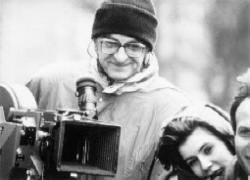
Segundo de Chomon
 France
- Director, Screenwriter, Actor, Cinematographer: A Life in Film
- Filmmaking Beginnings in Barcelona
- Collaboration with Pathé and Technical Innovations
- Return to Barcelona and Founding of Production Company
- Italian Career and Technical Mastery
- Later Collaborations and Legacy
Director, Screenwriter, Actor, Cinematographer: A Life in Film
Early Life and Military ServiceSegundo Víctor Aurelio Chomón y Ruiz was born in Teruel, Spain, on October 18, 1871, to Luisa Ruiz and Isaac Chomón. His father claimed descent from Henri de Chaumont, a son of Hugh the Great who died on the First Crusade in 1130. Young Chomón initially studied mechanics but later joined the army, eventually becoming an officer and fighting in the Spanish-American War.
Filmmaking Beginnings in Barcelona
Upon returning to Barcelona in 1902, Chomón established a small film-coloring workshop on Calle de Poniente. He also produced Spanish-language titles and intertitles for films. Chomón constructed his first camera from an old Malaga wine crate and experimented with filming weddings and other private events. In 1905, he directed his first comedy, "The Park Rowdies," and his first trick film, "The Electric Hotel."
Collaboration with Pathé and Technical Innovations
In 1906, Chomón captured a film of the wedding of King Alfonso XIII and an astronomical event—a solar eclipse. That same year, Pathé established a branch in Barcelona and hired Chomón as a cinematographer and film-coloring expert. At Pathé, he introduced the use of stencils instead of brushes for coloring films, leading to the development of the "Pathécolor" industrial stencils. Chomón's expertise in trick photography and special effects contributed to over 150 Pathé films, including "The Passion Play" (1907) and various "féerie" films.
Return to Barcelona and Founding of Production Company
In 1910, Chomón returned to Barcelona and, at Pathé's behest, established a film production company with Louis Gaunier. They filmed historical dramas and comedies, and in 1912, Chomón accepted an invitation from Itala Film in Italy.
Italian Career and Technical Mastery
In Italy, Chomón played a pivotal role in Itala's major productions, demonstrating his versatility in various genres, including melodrama, color films, and comedies. He reached the zenith of his technical prowess as a cinematographer, specializing in trick shots, special effects, and film coloring, constantly pushing the boundaries of these techniques. Chomón's use of lighting became innovative, incorporating artificial light for outdoor scenes and creating striking effects through backlighting and deep shadows.
Later Collaborations and Legacy
In the 1920s, Chomón worked in both Italy and France, contributing to notable films such as Abel Gance's "Napoleon" (1927) and Benito Perojo's "The Man with the White Soul" (1927), a precursor to "King Kong." He passed away in Paris on May 2, 1929, as one of the most celebrated figures of silent cinema, having actively adapted to the technical and conceptual revolutions that shaped the medium's first three decades.