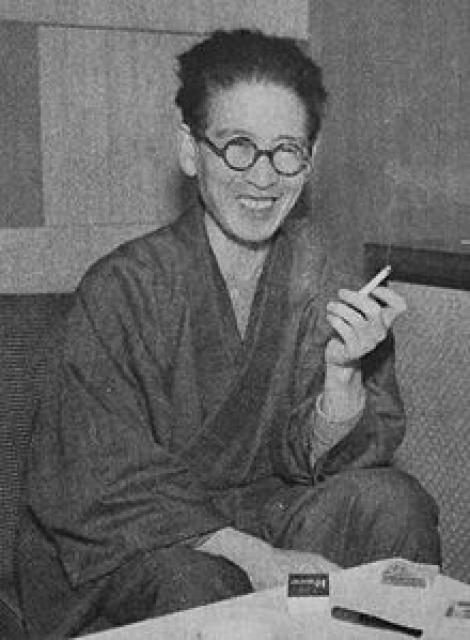
Sei Ito
 Japan
Japan- Sei Itō: A Literary Luminary
- Early Life and Education
- Influenced by James Joyce
- "Naramu Sekichi" and "The Art of the Novel"
- Controversy and "Lady Chatterley's Lover"
- Magnum Opus: "The Phoenix"
- Legacy and Recognition
Sei Itō: A Literary Luminary
Sei Itō, a towering figure in Japanese literature, was a multifaceted creative force as a writer, poet, literary critic, and translator. His profound influence on the Japanese literary landscape is evident in his groundbreaking works and his unwavering commitment to artistic freedom.
Early Life and Education
Born in Matsumae, Hokkaido, in 1895, Itō hailed from a family of educators. In 1928, he enrolled in the Tokyo Commercial Institute, where he would later make his literary debut in 1926. Itō's encounter with the writings of Sigmund Freud and James Joyce would deeply shape his writing.
Influenced by James Joyce
As the first Japanese translator of Joyce's "Ulysses," Itō was deeply influenced by the modernist master's stream-of-consciousness technique. In 1930, he published an influential essay on Joyce's method, setting the stage for his own groundbreaking work in this vein.
"Naramu Sekichi" and "The Art of the Novel"
Itō's seminal novel, "Naramu Sekichi" (1950), showcased his mastery of the stream-of-consciousness style. Concurrently, he penned "The Art of the Novel" (1948), a theoretical treatise that expounded on the techniques and principles of novel writing.
Controversy and "Lady Chatterley's Lover"
In 1950, Itō faced prosecution for his translation and distribution of D.H. Lawrence's controversial novel "Lady Chatterley's Lover." Accused of violating public morality, Itō penned the non-fictional work "Trial" (1952), defending Lawrence's art and challenging the labeling of his novel as pornography.
Magnum Opus: "The Phoenix"
"The Phoenix" (1953) is considered Itō's magnum opus, a poignant and insightful tale of a talented actress's arduous journey to the pinnacle of theatrical success. It remains one of the most acclaimed works in Japanese literature.
Legacy and Recognition
Sei Itō passed away in Tokyo in 1969. In 1990, the prestigious Sei Itō Literary Prize was established in his honor, celebrating his immense contribution to Japanese literature. Itō's unwavering pursuit of artistic freedom and his innovative approach to writing have left an enduring impact on the literary world, inspiring generations of writers and readers alike.


