Semen Geht
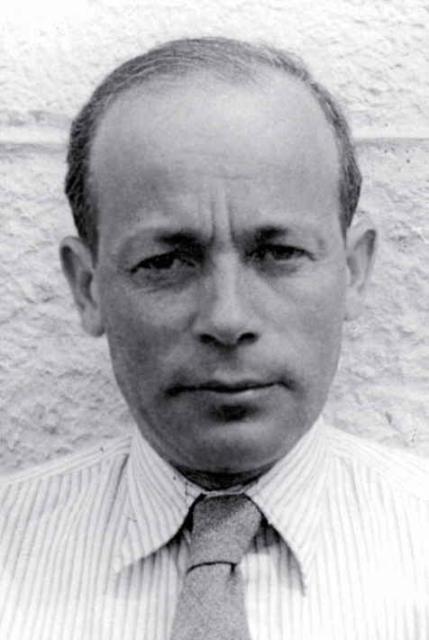
Semen Geht, also transliterated Gekht, was a Russian-language Soviet writer and journalist associated with the literary culture of Odessa. His fiction explored Jewish life and the transformation of society after the Revolution, often through the lives of working people caught between personal loyalty and political pressure. Reference works commonly give his dates as 1903–1963, but research by the Odessa Literary Museum has challenged both the standard birth information and some details of his early life.
Odessa beginnings
Geht was born in Odessa. Most biographical summaries state that he was born on March 27, 1903. An archival study by the Odessa Literary Museum, however, found no birth registration for a child of the name and date traditionally assigned to him. The museum identified an 1900 record for a boy named Shulim, son of Gersh and Lea Geht, whose family details appear to match the writer, and noted that he used the names Abraham and Semen. His own 1944 interrogation record listed his birth year as 1903. The discrepancy has not been resolved in standard reference works.
He grew up in a poor Jewish family and was orphaned young. As a teenager he worked in the newspaper trade, including as a typesetter and messenger, while beginning to write. His first poems appeared in Odessa newspapers in 1922 and attracted the encouragement of poet Eduard Bagritsky. Geht became part of the city’s literary circle, which included Isaac Babel, Ilya Ilf, Yuri Olesha and other writers associated with Odessa.
A Russian-Jewish literary voice
By the mid-1920s Geht had moved to Moscow, where he worked for the newspaper *Gudok*, known for its lively literary and satirical milieu. His early prose included the collection *Stories* (1925) and the novella *The Man Who Forgot His Life* (1927). Critics soon recognized him as a distinct voice in Russian-Jewish literature.
Jewish experience remained central to his fiction. He wrote about the changing life of Jewish communities after the Revolution and the movement of young people from small towns into Soviet industrial projects. His children’s and youth books included *The Shoemaker’s Son* and *Efim Kalyuzhny from Smidovichi*. His novel *The Ship Goes to Jaffa and Back* (1936), set in British Mandate Palestine, portrayed the lives of Jewish settlers and political debate there. Soviet critics sometimes regarded the book with suspicion, accusing it of expressing Zionist sympathies beneath its official framing.
One of his most discussed works was *An Instructive Story* (1939), about an engineer unjustly accused of sabotage. The book presented the machinery of false accusation and the way fear could keep bystanders silent. Writer Konstantin Paustovsky praised Geht’s courage and directness, while Soviet literary authorities criticized the story as a distorted picture of Soviet reality. A related theme appeared in *Together*, a novella set in a city closely resembling Odessa during the purges of the late 1930s.
War, arrest and return to writing
During the Second World War, Geht worked as a frontline correspondent for *Gudok*. He visited Odessa soon after its liberation in 1944 and published an essay, “A Son of Odessa,” in the army newspaper *Red Star*. On May 22 of that year, he was arrested. He was charged under the Soviet criminal code with anti-Soviet agitation and sentenced in 1945 to eight years in prison, without the right to correspondence.
Geht was released in 1952 and rehabilitated in 1956. He returned to literary work, although later accounts suggest that the imprisonment left deep marks and that he rarely discussed it. His postwar books included *The Nightingale Booth* (1957) and *Debts of the Heart* (1963). He also wrote memoirs of his literary friends and translated works from Yiddish, including writing by Sholem Aleichem.
Legacy
Most reference works list Geht’s death in Moscow in 1963. An Odessa Literary Museum study, drawing on correspondence and a 1964 obituary, gives reason to question that date as well. The uncertainties surrounding his records reflect the fragmentary and sometimes unreliable documentation of his life, but his literary identity is clear: an Odessa writer shaped by Jewish culture, Soviet upheaval and a close-knit circle of modern Russian prose writers.
Geht’s work combined vivid local observation with a persistent interest in how ordinary people respond to coercion, injustice and political fear. His fiction about fabricated cases and the silence surrounding them became especially striking in light of his own arrest. Today he is remembered as part of the Odessa literary school and as a distinctive voice in twentieth-century Russian-Jewish writing.