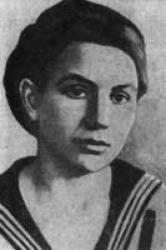
Semen Kozak
 Ukraine
Biography of Semyon Kozak
Semyon Antonovich Kozak was born into a family of a railroad worker and was of Ukrainian nationality. He joined the Communist Party in 1923 and participated in the civil war. In 1938, he graduated from the Military Academy named after M.V. Frunze.
At the beginning of the Great Patriotic War, Colonel Semyon A. Kozak worked in the Ministry of Defense, in the department responsible for the formation and training of reserves for the front. In October 1942, he was sent to the front and fought on the Stalingrad, Voronezh, Steppe, 2nd and 3rd Ukrainian fronts, commanding the 73rd Guards Rifle Division, and later the 21st Guards Rifle Corps.
After the war, Lieutenant General S.A. Kozak held various command positions. He was the commander of an army and an assistant to the commander of the military district forces. He was elected as a deputy of the Supreme Soviet of the USSR.
On October 26, 1943, Colonel Semyon A. Kozak, the commander of the 73rd Guards Stalingrad Rifle Division, was awarded the title of Hero of the Soviet Union for the successful crossing of the Dnieper River, consolidation and expansion of the bridgehead on the western bank of the river, and the displayed bravery and courage. On April 28, 1945, he was awarded a second Gold Star medal for new feats of valor on the front. He was also awarded numerous orders and medals. S.A. Kozak is a national hero of Yugoslavia.
Semyon Kozak was a highly educated, hardworking, and initiative-commander. He was known for his respect for subordinates, ability to teach without patronizing, and his knack for utilizing people's strengths and guiding them in the right direction. He was highly attentive to reconnaissance and obtaining maximum information about the enemy.
Throughout his military career, Semyon A. Kozak demonstrated bravery, courage, and strategic thinking. He led his troops with determination and initiative, always adapting to changing circumstances. He was highly respected and loved by his subordinates, and his leadership played a significant role in the successes of his division.