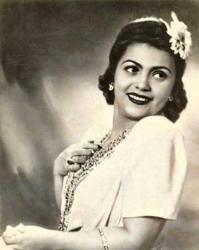
Sena Jurinac
- Early Life and Education
- Operatic Debut and Early Roles
- Rise to Prominence
- Versatile Repertoire
- International Acclaim
- Pedagogical Legacy
- Retirement and Legacy
Early Life and Education
Sena Jurinac (born Srebrenka Jurinac) was an Austrian and Croatian soprano born on October 24, 1921, in Travnik, Bosnia and Herzegovina. She studied at the Zagreb Academy of Music and honed her vocal skills under the tutelage of Milka Kostrenčić, who also taught renowned soprano Zinka Milanov.
Operatic Debut and Early Roles
Jurinac made her operatic debut in Zagreb in 1941 as Mimi in "La Bohème." Her subsequent roles included the Countess in "Le nozze di Figaro," Freia in Wagner's "Das Rheingold," and Isabella in Werner Egk's "Columbus." In 1944, she joined the Vienna State Opera, where she adopted the stage name "Sena" at the suggestion of Karl Böhm's assistant.
Rise to Prominence
Despite the wartime closure of the Vienna State Opera, Jurinac resumed her career in 1946 as Cherubino in "Le nozze di Figaro." She became a staple of the company for nearly 40 years, earning the prestigious titles of "Kammersängerin" and "Mozart Medalist." She also made notable appearances at the Covent Garden in 1946 and the Salzburg Festival in 1947.
Versatile Repertoire
Jurinac possessed a voice of remarkable versatility, spanning the range between soprano and mezzo-soprano. Her extensive repertoire included iconic roles such as Madame Butterfly, Desdemona, Elisabeth from Wagner's "Tannhäuser," Leonora from "La forza del destino," and Marie from "Wozzeck." Notably, she performed multiple leading roles in various operas, including Cherubino and the Countess in "Le nozze di Figaro," Donna Anna and Donna Elvira in "Don Giovanni," and Octavian and the Marschallin in "Der Rosenkavalier."
International Acclaim
Throughout her career, Jurinac traveled extensively, performing regularly at the Glyndebourne Festival Opera, the Covent Garden, and the San Francisco Opera. Her international presence extended to various concert halls and masterclasses, where she shared her vast knowledge and experience.
Pedagogical Legacy
In addition to her celebrated performance career, Jurinac remained active as a vocal педагоgue in Europe and the United States for many years. She guided numerous aspiring opera singers, passing on her esteemed vocal techniques and artistic insights.
Retirement and Legacy
Jurinac's final operatic performance took place as the Marschallin in the Vienna State Opera in 1982. However, she continued to make concert appearances and teach masterclasses, serving as a respected jury member at international vocal competitions. Sena Jurinac passed away in 2011, leaving an indelible mark on the world of opera as one of its most beloved and versatile sopranos.