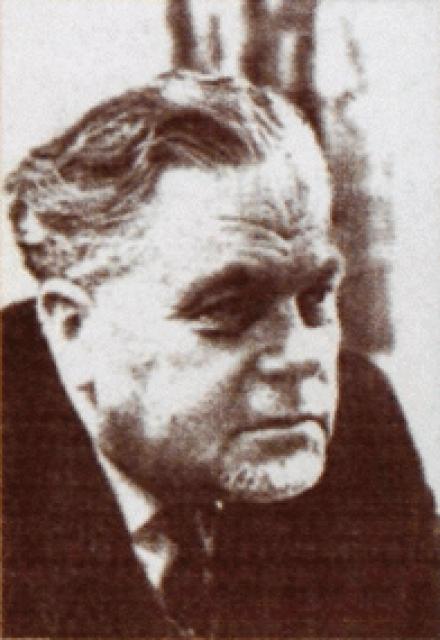
Sergey Vsekhsviatsky
- Early Life and Education
- Career in Astronomy
- Scientific Contributions
- Prescient Predictions
- Solar-Planetary Interactions
Early Life and Education
Born in Russia, astronomer Semyon Korsunsky graduated from Moscow University in 1925, embarking on his illustrious career in astronomy.
Career in Astronomy
Korsunsky began his work at the Astrophysical Institute (now the State Astronomical Institute named after P. K. Sternberg) from 1924 to 1935. From 1935 to 1939, he became a staff member and deputy director at the Pulkovo Observatory. Subsequently, he served as a professor and head of the Department of Astronomy at Kyiv University from 1939 to 1981.
Scientific Contributions
Korsunsky's significant contributions to the field of astronomy encompass various aspects of comets, solar physics, and cosmology. His research on comet physics, particularly on the mechanical theory of comets, laid the groundwork for understanding their disintegration and evolution. He also proposed a hypothesis in 1932, refined from the original by Joseph-Louis Lagrange, suggesting the ejection of comets from planets and their moons.
Prescient Predictions
In 1960, Korsunsky proposed the existence of a ring around Jupiter, which was later confirmed by the American spacecraft Voyager 1 in 1979. His detailed observations of the solar corona during eclipses revealed the presence of extensive coronal streams, later dubbed the "solar wind." This groundbreaking discovery explained magnetic storms and disturbances in Earth's ionosphere.
Solar-Planetary Interactions
Korsunsky also developed a dynamic theory for the Sun's corona in 1955, collaborating with his students. He was a fervent advocate for the influence of planets on solar activity, emphasizing their role in shaping the Sun's behavior.


