Shaldon Glashow
 USA
USA- Biography of Sheldon Glashow
- Contributions to Physics
- Contributions to the Theory of Quarks
- Personal Life and Recognitions
Biography of Sheldon Glashow
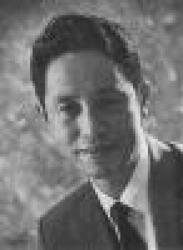
American physicist Sheldon Lee Glashow was born in New York. He was the youngest of three sons of immigrants from Bobruisk, Lewis Gluhovsky and Bella Rubin. Gluhovsky changed his surname to Glashow and founded a successful plumbing repair company in New York. Glashow attended the Bronx High School of Science, where his classmates included Steven Weinberg and Gerald Feinberg, who later became a physicist at Columbia University. Glashow credits them for sparking his interest in physics. After receiving his bachelor's degree in science from Cornell University in 1954, Glashow enrolled in the graduate program at Harvard University, which he completed in 1959. His dissertation, titled "The Vector Meson in Elementary Particle Decays," was written under the guidance of Julius S. Schwinger, who had a significant influence on Glashow's scientific career. From 1958 to 1960, Glashow was a fellow at the University of Copenhagen. He then spent a year as a research physicist at the California Institute of Technology, followed by teaching physics at Stanford University and the University of California, Berkeley. In 1967, Glashow returned to Harvard, where he was appointed the Eugene Higgins Professor of Physics in 1979. He still holds this position today.
Contributions to Physics
A significant portion of Glashow's work has been devoted to the problem of unifying all the forces observed in nature. In the early 19th century, scientists believed that there were three distinct and externally independent forces in nature: gravity, electricity, and magnetism. Progress in simplifying this view was achieved in the 1960s by Scottish mathematician and physicist James Clerk Maxwell, who showed that electricity and magnetism were different manifestations of the same entity, now known as the electromagnetic field. Maxwell's theory explained many previously mysterious phenomena (mainly the nature of light) and predicted the existence of radio waves. It served as a stimulus for the development of a more general theory that would encompass all the forces of nature. In the first three decades of the 20th century, physicists learned about the existence of two additional interactions: the strong force, which holds protons and neutrons together to form atomic nuclei, and the weak force, which causes nuclear decay. However, both the strong and weak forces differed from the previously known forces in one important aspect: gravity and electromagnetism have unlimited range, while the strong force is effective only at distances on the scale of atomic nuclei, and the weak force is effective at even smaller distances.
The groundbreaking theoretical ideas for which Glashow, Abdus Salam, and Weinberg were awarded the Nobel Prize led to the unification of electromagnetism and the weak force. Just as Maxwell's unification of electricity and magnetism regarded them as different aspects of a single "electromagnetic" interaction, the Glashow-Salam-Weinberg theory treated electromagnetism and the weak force as different aspects of a unified "electroweak" interaction. Glashow's first attempt in 1960 to unify electromagnetism and the weak force was based on the concept of gauge symmetry. A similar formulation was proposed a year later by Salam. In everyday life, we call an object symmetrical if it is indistinguishable from its mirror reflection. Physicists have introduced many other types of symmetry. For example, charge symmetry in electromagnetism means that the interaction between two particles remains unchanged if all negative charges are replaced by positive charges and vice versa. Gauge symmetry is inherent in physical properties or relationships that remain invariant under a change of scale or reference point for relative measurements. In 1954, Chen-Ning Yang and Robert L. Mills, working at the Brookhaven National Laboratory, extended the concept of gauge symmetry to the more complicated physics of the strong interaction. Although their research did not develop into a working theory, it paved the way for all subsequent attempts to describe fundamental interactions, including Glashow, Weinberg, and Salam. In a sense, Glashow's attempt in 1960 to unify electromagnetism and the weak force can be considered successful, as his theory not only unified these forces but also made them indistinguishable. It predicted the existence of four particles - the carriers of the interactions. One of them could be identified with the photon, the quantum of light already known as the carrier of electromagnetism. The other three particles, denoted W+, W, and Z, were postulated to be the carriers of the weak interaction of matter. In the 1960 theory, all four particles were massless. In quantum mechanics, the range of interaction is inversely proportional to the mass of the carrier particle, so zero mass corresponds to an infinite interaction range. Thus, contrary to all experimental data, Glashow's theory assumed an unlimited range of interaction not only for electromagnetism but also for the weak force.
Glashow's proposed gauge symmetry led to another unconventional conclusion: when two particles exchange electromagnetic interaction, their electric charges do not change because the photon (the carrier of electromagnetic radiation) does not carry electric charge. However, in all known weak interactions at that time, there was an exchange of unit electric charge, for example, a decaying neutron (with charge 0) could produce a proton (with charge +1) and an electron (with charge -1). Phenomena of this kind could be explained by the exchange of particles W+ and W- with charges +1 and -1, respectively. But the introduction of the electrically neutral particle Z meant that some weak interactions should occur without charge exchange, similar to electromagnetic interaction. The prediction of events called neutral weak currents later became a decisive experimental test for unified theories. Glashow attempted to fix the main drawback of his theory - the infinite range of weak interaction - by postulating large masses for the W+, W-, and Z0 particles. However, this strategy was unsuccessful, as including masses led to impossible results, such as infinite intensities of certain weak interactions. Similar problems that arose two decades earlier were resolved using a mathematical procedure called renormalization, but in the case of the weak interaction, renormalization "failed". The problem of massive W and Z particles was solved a few years later when Weinberg, Salam, and other scientists applied new methods.
Working independently of each other in 1967 and 1968, Weinberg and Salam developed a unified theory of the weak and electromagnetic interactions based on the same gauge symmetry used by Glashow. The Weinberg-Salam theory also postulated the existence of four carrier particles, but to give mass to the W+, W-, and Z0 particles and zero mass to the photon, the authors introduced a new mechanism. The idea of this mechanism, called spontaneous symmetry breaking, originated in solid-state physics. Subsequently, W and Z particles were discovered experimentally by Carlo Rubbia among the products of reactions occurring in collisions of particles accelerated to high energies. In 1979, Glashow, Salam, and Weinberg were awarded the Nobel Prize in Physics "for their contributions to the theory of unified weak and electromagnetic interactions between elementary particles, including the prediction of weak neutral currents." In his Nobel lecture, Glashow shared memories of the days when Julius Schwinger first encouraged him to pursue the search for unified interactions: "In 1956, when I took my first steps in theoretical physics, the theory of elementary particles resembled a patchwork quilt. Electrodynamics, strong interactions, and weak interactions were completely independent disciplines, taught and studied in complete isolation from each other. A consistent theory that would unify all interactions did not exist." He further noted, "Much has changed since then... Now we have a theory that is a unified work of art, and the patchwork quilt has become a tapestry."
Contributions to the Theory of Quarks
In addition to his work on weak and electromagnetic interactions, Glashow made significant contributions to understanding the strong force. In the 1940s and 1950s, experiments at high-energy accelerators discovered many short-lived particles associated with protons and neutrons. By 1969, there were over 100 known particles that were considered equally elementary. This situation did not satisfy many physicists. In 1963, Murray Gell-Mann and American physicist George Zweig proposed a way to reduce the number of fundamental particles required for a theory of matter. They hypothesized that the proton, neutron, and all their known "relatives" could be composite particles made up of several more fundamental particles, which Gell-Mann called quarks. Quarks were believed to be bound together by the strong interaction. In the initial version of the Gell-Mann theory, there were three types of quarks: up quarks, down quarks, and strange quarks. A year later, when the quark model was still purely speculative, Glashow, together with physicist James D. Bjorken, proposed introducing a fourth quark, the charm quark. Glashow named it the charm quark because it acted like a magical charm, allowing certain phenomena predicted by the three-quark theory but not observed in reality to be eliminated. In 1970, Glashow, along with John Iliopoulos and Luciano Maiani, presented even stronger arguments for the existence of the charm quark. The particles containing these quarks were discovered in 1974. Glashow continues to teach and conduct research at Harvard University as a Nobel laureate. He has attempted to construct a theory that unifies the strong and electroweak interactions. In 1987, Glashow (together with John N. Bahcall from the Princeton Institute for Advanced Study) reported lower estimates of neutrino mass. New estimates, based on the analysis of a supernova explosion, indicate that the mass of all neutrinos is insufficient to reverse the expansion of the universe, as some scientists previously hypothesized.
Personal Life and Recognitions
In 1972, Glashow married Joan Shirley Alexander, and they have three sons and a daughter. Glashow has been awarded the J. Robert Oppenheimer Medal by the University of Miami (1977) and the George Ledlie Prize by Harvard University (1978), as well as honorary degrees from Yeshiva University and Aix-Marseille University. He is a member of the American Physical Society, the American Academy of Arts and Sciences, and the National Academy of Sciences.