Shearl Dekan
 France
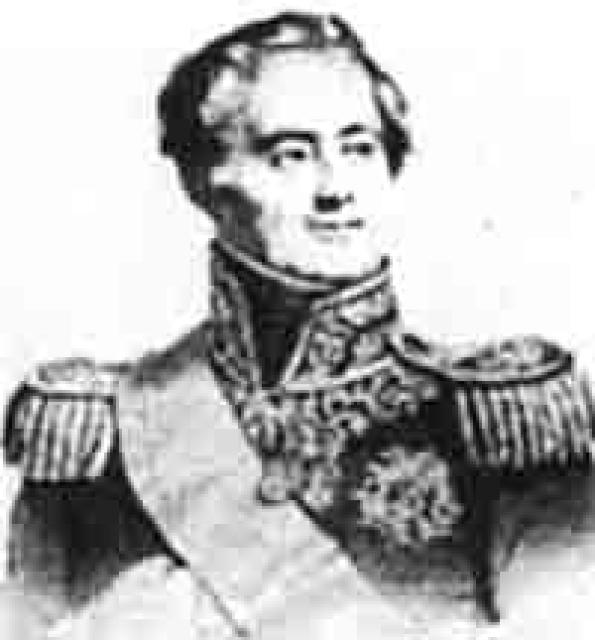
Biography of Charles Mathieu Isidore Decaen
Charles Mathieu Isidore Decaen, a count and divisional general, was born on May 16, 1800. He began his military career as a second-class gunner in the artillery division of Brest on July 27, 1787. On September 14, 1792, he became a sergeant-major in the 4th battalion of the National Guard of Calvados. By May 1, 1793, he was promoted to sub-lieutenant and became an adjutant to General Kléber.
From November 26, 1793, Decaen served as a staff adjutant for a battalion in the army of the Brest coastline. He participated in the siege of Mainz and later took part in military actions in Vendée and on the Rhine. He became renowned for successfully crossing the Rhine under heavy fire. From September 12, 1795, he served as a staff adjutant for a brigade, and later the 5th division.
On November 12, 1795, Decaen was captured at Flankenhal and was exchanged in April 1796. He was promoted to brigadier general on July 3, 1796. He participated in numerous battles and was wounded multiple times. From June 16, 1798, he commanded a sub-division in Cherbourg. In March 1799, he became the commander of a brigade under General Suam. He was wounded in the battle of Stockach. On April 5, 1799, he was transferred to the division of General Duhesme and subsequently served in various divisions on the Rhine. On April 25, 1800, he took charge of the 1st brigade in General Suam's division. Finally, on May 16, 1800, he was promoted to divisional general and became the commander of the Rhine army, a position he held until August 7, 1800. He participated in the battle of Hohenlinden.
From November 12, 1800, Decaen commanded the 3rd division under General Moro. His actions at Hohenlinden and the capture of Munich earned him high praise. On July 24, 1801, he became the inspector general of infantry for the 8th military district. After his victory at Hohenlinden, Decaen appealed to Napoleon to be assigned to India. On June 18, 1802, he was appointed as the general-captain of French colonies in Île-de-France and Bourbon in India. In 1803, he sailed from Brest with six ships and 1,800 men. He narrowly escaped capture by the English at Pondicherry but managed to reach Île-de-France, where he fortified the islands and organized privateering, causing significant damage to English trade. For almost eight years, Decaen successfully defended these islands against English forces. However, on December 2, 1810, he was forced to surrender.
On April 16, 1811, Decaen returned to France and was appointed as the commander of the Catalan army, replacing Marshal MacDonald. He achieved victory against the enemy at Altafulla, Sant Feliu, and Viac. Through his successful actions, Decaen forced the English to lift the siege of Tarragona and then defeated them at Pass d'Ordal and Villafranca on September 13, 1811. However, he was later compelled to redeploy his troops to defend Bordeaux. On November 2, 1811, he was recalled to France.
From December 2, 1813, Decaen served as the commander-in-chief of the French forces in Holland, leading the 1st Corps. He was forced to evacuate Willemstad and Breda, and on December 16, he was recalled. From April 15, 1814, he became the commander-in-chief of the French forces in Dordogne and, ten days later, in Upper Garonne. After Napoleon's abdication, Decaen sided with the Bourbons and, on June 21, 1814, was appointed as the governor of the 11th military district in Bordeaux. During the Hundred Days, he surrendered Bordeaux to General Clausel on April 2, 1815. From May 28, 1815, he became the commander-in-chief of the 9th and 10th military districts and the commander of the observation corps in the Eastern Pyrenees. After Napoleon's second abdication on December 13, 1815, Decaen was arrested and imprisoned but was granted amnesty on February 23, 1817. On December 30, 1818, he was assigned to the reserve of the General Staff. He returned to active service after the July Revolution of 1830, holding positions in various committees and serving as the chairman of the Colonial Legislation Commission.