Sigaesi Inoue
 Japan
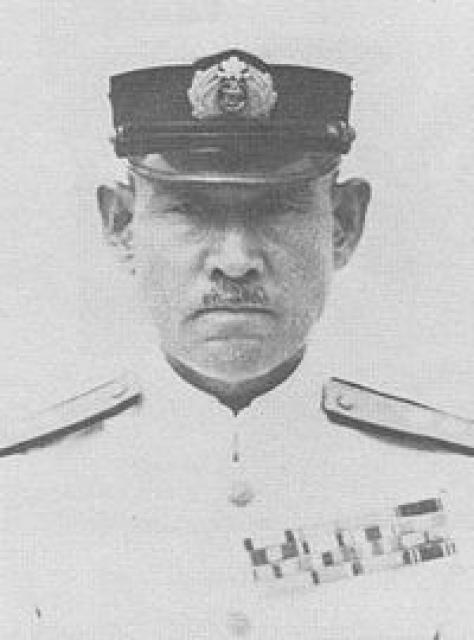
JapanBiography of Sigeo Inoue
Sigeo Inoue (December 9, 1889 - December 15, 1975) was a Japanese naval officer and admiral. He graduated from artillery courses in 1912, torpedo courses in 1912, and the Naval Academy in 1917. Inoue was appointed to the embassy in Switzerland on December 1, 1918, and was transferred to Italy on September 1, 1921. He returned to Japan on December 1, 1921, and served primarily in staff positions.
From 1927 to 1929, he served as the naval attaché in Italy. From November 15, 1933, to November 16, 1935, he commanded the battleship "Hiei". From November 15, 1935, to November 16, 1936, he was the commander of the Yokosuka Naval Base. On October 20, 1937, he became the director of the Bureau of Naval Affairs. From October 23, 1939, he commanded naval formations, and from October 1, 1940, he served as the director of the Naval Aviation Command. On August 11, 1941, he was appointed as the commander of the newly forming 4th Fleet.
Under Inoue's command, a combined fleet was created in December 1941, based on the fleet, to carry out operations in the Southern Seas. Inoue's forces were responsible for patrol duties, ensuring maritime communications, and capturing the Wake and Rabaul islands. Using aircraft based on the fleet's ships, Inoue destroyed American airfields on Guam and Wake Island. Guam was captured on December 10, 1941, followed by Wake Island on December 22 (solely by the fleet), and Rabaul on December 23.
In May 1942, Inoue began preparations to capture New Guinea, but on May 7-8, American aircraft sank the aircraft carrier "Shoho" and damaged the aircraft carrier "Shokaku," leading to the operation's failure. In the Battle of the Coral Sea, despite a successful start, Inoue underestimated the enemy's strength and ordered the pursuit of the American fleet to be discontinued. As a result, on October 26, 1942, he was relieved of his command and transferred to the position of Chief of the Naval Academy. From 1943, he was a member of the Supreme War Council.
From August 5, 1944, to May 15, 1945, Inoue served as the Deputy Minister of the Navy. Simultaneously, from November 4-18, 1944, he was the head of the shipbuilding command of the Navy, and from May 1-15, 1945, he commanded the naval aviation. From May 15, 1945, he served as a naval advisor to the emperor. On October 10, 1945, he was discharged from service and transferred to the reserve on October 15.