Sigismund III
 Poland
- Sigismund III Vasa, King of Poland and Sweden
- Early Life and Election to the Polish Throne
- Reign in Poland
- Religious Policies and the Brest Union
- The Jagiellonian Dynasty and the Swedish Throne
- Marriages and Family
- Support for the False Dmitrys
- Later Reign and Legacy
Sigismund III Vasa, King of Poland and Sweden
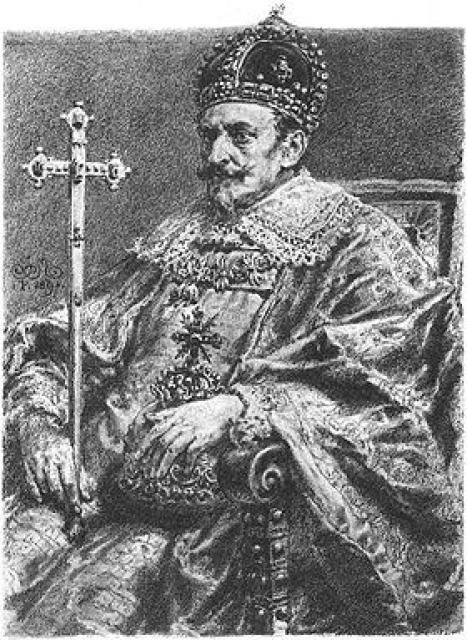
Sigismund III Vasa was a Polish king and Grand Duke of Lithuania who also reigned as King of Sweden.
Early Life and Election to the Polish Throne
Sigismund was born in 1566, the grandson of Gustav Vasa of Sweden and Sigismund I of Poland. His mother was Catherine Jagiellon, a princess of the Jagiellonian dynasty. In 1587, he was elected King of Poland with the support of his aunt, Anna Jagiellon, and the influential Polish chancellor Jan Zamoyski.
Reign in Poland
Sigismund's reign in Poland was marked by conflict and political instability. He faced opposition from his Austrian rival, Archduke Maximilian, who he defeated in 1588. However, he alienated powerful nobles, including Chancellor Zamoyski, by his attempts to extend royal authority.
Religious Policies and the Brest Union
Sigismund was a devout Catholic and sought to strengthen the position of the Catholic Church in Poland. He supported the Jesuit order and played a key role in the Brest Union (1596), which incorporated Orthodox believers into the Catholic Church.
The Jagiellonian Dynasty and the Swedish Throne
In 1592, Sigismund's father died, and he inherited the Swedish throne. However, his reign in Sweden was short-lived. His pro-Catholic policies and the growing influence of his uncle, Charles IX, led to his deposition in 1599. Sigismund refused to abandon his claim to the Swedish throne and embarked on a series of wars against Sweden.
Marriages and Family
Sigismund married three times: Anne of Austria (1592-1598), Constance of Austria (1605-1631), and Cecilia Renata of Austria (1637-1644). He had several children, including the future King Władysław IV of Poland.
Support for the False Dmitrys
Sigismund supported the False Dmitrys, pretenders to the Russian throne, as part of his plans to expand Polish influence to the east. His support led to the Polish-Russian War (1609-1618), which ended with a truce that ceded significant territories to Poland.
Later Reign and Legacy
Sigismund's reign saw the beginning of the decline of the Polish-Lithuanian Commonwealth. His attempts to strengthen royal authority were met with resistance from the nobility, and the principle of "golden freedom" (the need for unanimity in decision-making) hindered reforms. Sigismund died in 1632, leaving behind a legacy of religious division and political turmoil.