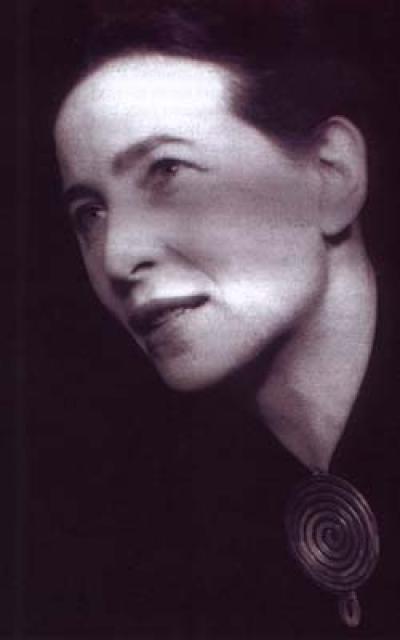
Simone De Beauvoir
 France
- Biography of Simone de Beauvoir
- The Existentialist Movement and Sartre
- "The Second Sex" and Feminism
- Literary Career
- Personal Life
- Later Years and Legacy
Biography of Simone de Beauvoir
Childhood and EducationSimone de Beauvoir, a trailblazing French writer and philosopher, was born into a well-to-do family in Paris on January 9, 1908. Her father, George Bertrand de Beauvoir, was a lawyer, and her mother, Françoise Brasseur, was a devout Catholic. Simone's childhood was happy and sheltered, but she also experienced the societal constraints faced by women at the time.
After graduating from high school, Beauvoir enrolled in the Sorbonne to study philosophy. She completed her "agrégation" (doctoral thesis) in 1929 and began teaching philosophy in Marseille and Rouen.
The Existentialist Movement and Sartre
In the early 1940s, Beauvoir met the existentialist philosopher Jean-Paul Sartre. Their intellectual connection and shared beliefs would profoundly shape both their personal and professional lives. Together, they participated in the French Resistance during World War II.
"The Second Sex" and Feminism
Beauvoir's most famous work, "The Second Sex" (1949), is a seminal feminist text that explored the oppression and subordination of women throughout history. The book challenged traditional gender roles and argued for women's equality.
Literary Career
Throughout her career, Beauvoir wrote numerous novels, essays, and plays that reflected her existentialist and feminist perspectives. Her novels, such as "She Came to Stay" (1943) and "The Mandarins" (1954), often drew upon her own experiences.
Personal Life
Beauvoir and Sartre had an unconventional but enduring relationship. They chose to live as lifelong companions without marriage or children. Beauvoir believed that traditional marriage would hinder her independence and intellectual pursuits.
Later Years and Legacy
In her later years, Beauvoir wrote extensively about aging, death, and the human condition. She died on April 14, 1986, and was buried alongside Sartre in the Montparnasse Cemetery.
Despite facing criticism and controversy throughout her life, Beauvoir's work continues to inspire and provoke. Her legacy as a pioneering feminist, philosopher, and writer remains an integral part of the history of thought.


