
Samuel Clarke
 Great Britain
- Biography of Samuel Clarke
- Struggle Against English Empiricism
- Opponent of Materialism
- Notable Works
- Legacy
Biography of Samuel Clarke
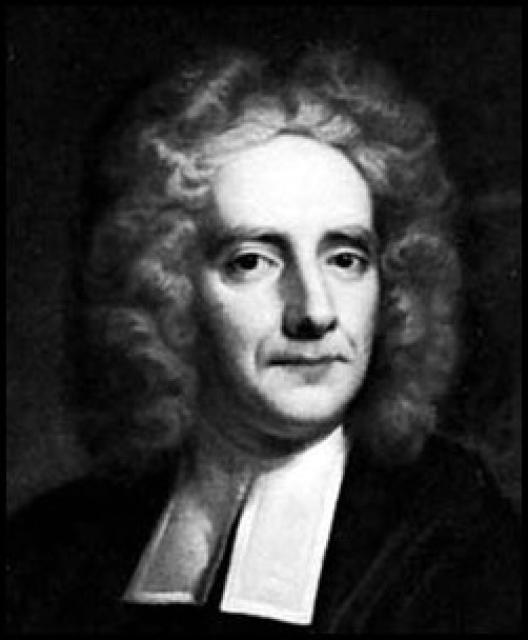
IntroductionSamuel Clarke was a renowned British philosopher and scientist, born on October 11, 1675, and died on May 17, 1929. Although he did not leave a significant impact on the world of philosophy, his works were highly valued during his lifetime. Clarke's main focus was on Cartesian philosophy and his research on Newton's theories. His primary concerns revolved around the concepts of eternity and the infinity of matter.
Struggle Against English Empiricism
Clarke's works often resembled those of his contemporaries, but their main value lay in his thoughts on combating English empiricism. While his writings were sometimes dull and repetitive, they were written in simple language, making them understandable even to those unfamiliar with the subject. Clarke made a conscious effort to formulate his ideas clearly, ensuring that his message could be grasped by all.
Opponent of Materialism
Clarke was a vehement opponent of materialism, and his main rival in this regard was Leibniz. These two great minds engaged in a serious battle, each defending their own theories on the existence of God. Clarke often fell short against the materialists due to his less imaginative nature compared to his opponents. Throughout his life, Samuel Clarke was unable to construct a comprehensive system for his "discoveries." However, he did provide clear definitions for terms such as immortality, immateriality of the soul, free will, and the foundation of morality.
Notable Works
One of Clarke's most prominent works was the book "A Discourse Concerning the Being and Attributes of God." In this work, his views closely aligned with those of Descartes, although Clarke attempted to slightly modify his reasoning to avoid direct repetition of his mentor's ideas. During his time, the controversies and correspondence between Clarke and Leibniz garnered more interest than his other works. These exchanges allowed the scholars to express their thoughts vividly. Samuel Clarke vigorously defended his perspective and endeavored not to yield to his rival, as Cartesian philosophy was the purpose of his life.
Legacy
In 1738, Samuel Clarke's works began to be published, and his correspondence with Leibniz gained popularity. As a result, Clarke found supporters and became one of the most respected and progressive philosophers of his time in England. In 1943, a collection of Clarke's works titled "Oeuvres philosophiques de Samuel Clarke" was published, which enjoyed significant popularity among his followers.



