Siril Henshelvood
 Great Britain
- Biography of Cyril Hinshelwood
- Education and Early Career
- Contributions to Chemical Kinetics
- Later Career and Contributions to Biology
- Later Life and Legacy
Biography of Cyril Hinshelwood
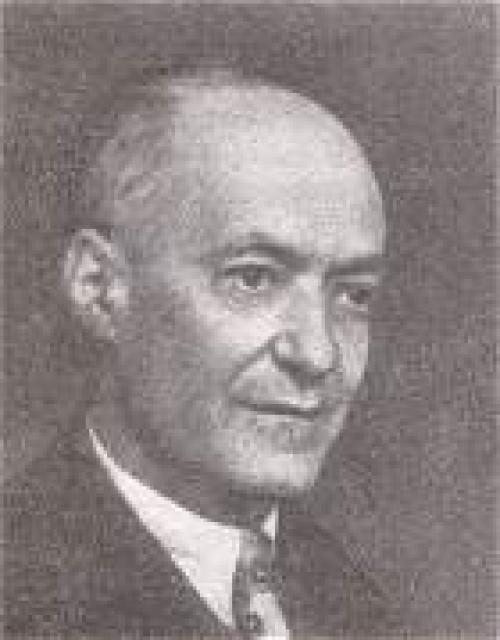
Cyril Hinshelwood was an English physicist and chemist, known as one of the creators of the theory of chain reactions. He was born in London, the only child of Norman Macmillan Hinshelwood, an accountant, and Ethel Francis Smith. Due to his weak health, the family moved to Canada, but after his father's death in 1904, his mother returned to England with Cyril.
Education and Early Career
Hinshelwood attended Westminster City School in London. In 1916, he was awarded the Brackenbury Scholarship at Balliol College, Oxford University. However, due to the First World War, he could not immediately take up the scholarship. Instead, he worked as an assistant to the chief chemist at an explosive factory in Queensferry. In 1919, he enrolled at Oxford University and published three scientific papers while still a student. He became a doctoral student at Balliol College in 1920 and a junior lecturer at Trinity College in 1921. He established his own laboratory in the basements of Balliol College and separate wings in Trinity College, where he conducted scientific research and taught physical chemistry.
Contributions to Chemical Kinetics
In the early 1920s, Hinshelwood turned to the problems of kinetic theory to explain the dynamics of chemical reactions in the gas phase. He focused on the thermal decomposition of various gaseous compounds, which can occur through either mono- or bimolecular reactions. While the kinetic theory often provided a satisfactory explanation for bimolecular reactions, it was much more difficult to understand how a single molecule could acquire the necessary activation energy for a monomolecular reaction. In 1921, Hinshelwood realized that the key was the collision activation. While most of his contemporaries focused on specific reactions, he derived general principles for such reactions based on data from various reactions. He proposed the concept of quasi-monomolecular reactions and predicted whether a reaction would be mono- or bimolecular based on a specific relationship between collision activation and deactivation processes. He described these findings in his book "The Kinetics of Chemical Change in Gaseous Systems" (1926).
Later Career and Contributions to Biology
In 1927, Hinshelwood began studying the reaction between gaseous hydrogen and oxygen. He showed that the reaction proceeds very slowly within a certain pressure range, but explosively outside of that range. Using the concept of chain or branching reactions, which was previously applied by Nikolay Semenov to the oxidation process of phosphorus, Hinshelwood successfully described the mechanism of this reaction. After Frederick Soddy's retirement in 1937, Hinshelwood succeeded him as the professor of inorganic and physical chemistry at Oxford. He continued his research in the laboratories of Balliol and Trinity Colleges until 1941.
During World War II, Hinshelwood's character changed due to his administrative duties and the impact of the war. His sense of humor and laughter became a thing of the past, but his passion for research remained. He helped maintain Oxford's reputation as a renowned educational and research center, striving to find the right balance between art and science within the university. He supported the chemists at the university, many of whom later became pioneers in new directions in theoretical chemistry and biology. He was highly respected for his teaching abilities and, as a member of the university press, he established a long-term program of scientific publications.
In the late 1930s, Hinshelwood began studying bacterial growth using chemical kinetics methods. He believed that bacterial adaptation to the environment occurs at a molecular level and, therefore, adaptability is inherited. Although his model of the cell contradicted the views of some biologists, many of his ideas, now included in the theory of cell regulation, played an important role in immunological research. Hinshelwood viewed a living cell as a complex set of interconnected chemical reactions, which he compared to "a multitude of simple musical themes, each played on a separate instrument... The functioning of a living cell depends on the combination of all these elements, like in a symphony. With some knowledge of the theory of individual elements, can we establish any laws of symphony composition?"
Later Life and Legacy
Hinshelwood was a connoisseur of modern and classical literature and knew at least eight languages, including Greek and Latin. He could lecture in French, German, Italian, Spanish, and Russian. He was a member of the Oxford Dante Society and served as the president of the Oxford divisions and associations of modern and classical languages. From 1921, he painted oil paintings using a palette he received as a gift at the age of nine. In 1968, over 100 of his paintings, including Oxford interiors, landscapes from London to Oxford, and portraits, were exhibited posthumously. He was also interested in music, particularly Beethoven and Mozart, Chinese porcelain, and Persian carpets.
Hinshelwood and Nikolay Semenov were awarded the Nobel Prize in 1956 "for their researches into the mechanism of chemical reactions." The significance of their research in the field of chain reactions was explained by Semenov in his Nobel lecture: "The theory of chain reactions opens up the possibility of approaching closer to the solution of the main problem of theoretical chemistry – the connection between reactive capacity and the structure of reacting particles... It is hardly possible to enrich chemical technology to any degree or achieve decisive success in biology without this knowledge... It is necessary to combine the efforts of educated people from all countries and solve this most important problem in order to uncover the secrets of chemical and biological processes for the benefit of peaceful development and prosperity of humanity."
After retiring from Oxford in 1964, Hinshelwood moved to his own home in London. He became a staff member at Imperial College of Science and Technology in London and continued his research on bacterial growth. He served as a patron of the British Museum and chaired the council of Queen Elizabeth College in London. He passed away on October 9, 1967, in London.