Lui Alvares
 USA
USA- Biography of Louis Alvarez
- Early Career and Contributions
- Contributions to Particle Physics
- Other Achievements and Personal Life
Biography of Louis Alvarez
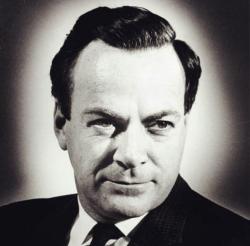
Louis Walter Alvarez, an American physicist, was born in San Francisco, California. His mother, Harriet Skidmore (nee Smith) Alvarez, and his father, Walter Clement Alvarez, were both highly educated individuals. His father was a professor at the University of California, physician, and journalist who covered medical topics. In 1926, when Louis's father started working at the Mayo Clinic, the whole family moved to Rochester, Minnesota. Louis, one of four children, graduated from Rochester High School in 1928 and enrolled at the University of Chicago. Initially specializing in chemistry, he was encouraged by one of his professors to study physics. He graduated with honors from the university in 1932 and stayed in Chicago for further studies, obtaining a master's degree in 1934 and a doctorate in 1936.
Early Career and Contributions
During his university years, Louis developed a passion for aviation and took flying courses. He became so skilled in flying that he made his first solo flight after only three hours and fifteen minutes of instruction. After returning to California, Louis pursued research in nuclear physics, working as a research assistant at the University of California, Berkeley, and later becoming a professor there in 1938. In the late 1930s, he, along with Jacob H. Waens, produced an artificial isotope of mercury with an atomic weight of 198 using the cyclotron at Berkeley. The U.S. Bureau of Standards later adopted the wavelength of light emitted by a mercury lamp filled with this isotope as the standard for length measurement. Through his further research, Louis experimentally demonstrated in 1937 that atomic nuclei could capture some electrons located on the closest orbits to the nucleus (K-capture).
Contributions to Particle Physics
One of Louis's significant contributions to particle physics was his development of a method to produce beams of very slow neutrons, which opened the path for fundamental studies of neutron scattering and allowed for the first measurement of the neutron's magnetic moment. Shortly before the start of World War II, Louis and one of his colleagues discovered tritium (a radioactive isotope of hydrogen) and helium-3 (an isotope that plays a role in low-temperature physics). In 1940, Louis took a leave of absence from Berkeley to conduct military research at the Radiation Laboratory of the Massachusetts Institute of Technology (MIT). Here, in collaboration with Lawrence Johnston, he developed three important radar systems, including an improved microwave radar system that enabled the detection and safe landing of aircraft lost in fog at airports. For his contributions, Louis was awarded the Distinguished Aviation Medal, the highest aviation award in the United States, by the National Aeronautic Association in 1946.
After the war, Louis returned to Berkeley and oversaw the construction of the Radiation Laboratory for fundamental research in atomic energy, including the construction of the 40-foot proton linear accelerator, the first of its kind. His research involved the study of elementary particles produced in these new accelerators, necessitating the development of particle detection techniques. Louis and his colleague, Jack Frank, invented the rotating stereographic system, nicknamed "Frankenstein," for photographing particle tracks. They also developed computer programs for sorting and analyzing the vast amount of data generated by these experiments, leading to the discovery of numerous elementary particles, including short-lived resonances. In 1968, Louis was awarded the Nobel Prize in Physics "for his decisive contributions to elementary particle physics, in particular the discovery of a large number of resonant states, made possible through his development of the technique of using the hydrogen bubble chamber and his original analysis of the data."
Other Achievements and Personal Life
Aside from his contributions to physics, Louis Alvarez was a scientist with diverse interests. In 1965, he led a joint American-Egyptian expedition that used cosmic ray probing to investigate the existence of hidden chambers in Pharaoh Khafre's pyramid in Giza (no such chambers were found). In 1979, he and his son, Walter Alvarez, a professor of geology at Berkeley, proposed a controversial theory to explain the extinction of dinosaurs and other life forms 65 million years ago. They suggested that an asteroid collided with Earth, creating dust and smoke clouds that blocked sunlight and led to the death of the vegetation on which dinosaurs relied. This theory was later supported by the discovery of widespread soot particles dating back 65 million years, possibly indicating a global fire caused by the impact. However, this theory remains disputed.
Throughout his career, Louis Alvarez received numerous awards and honors, including the John Scott Medal from the City of Philadelphia (1953), the Albert Einstein Memorial Award from the Lewis and Rose Strauss Memorial Fund (1961), the IEEE Medal of Honor for Innovations in Engineering (1963), and the National Medal of Science for his achievements in science. He served as the president of the American Physical Society in 1969 and was a member of the National Academy of Sciences and the National Academy of Engineering. Louis was also granted honorary degrees from the University of Chicago, Carnegie Mellon University, Kenyon College, and the University of Notre Dame.
In 1936, Louis married Geraldine Smithwick, with whom he had a son and a daughter. They later divorced, and in 1958, Louis married Janet Landis. They also had a son and a daughter together.