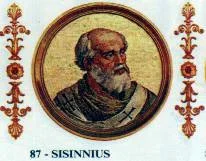
Sisinnius
A churchman in Byzantine Rome
Sisinnius was a Syrian-born churchman who became bishop of Rome in January 708. The surviving record of his life is brief. He was the son of a man named John, and accounts describe him as already elderly and suffering from severe gout when he was elected. His health was so poor that he could not feed himself without assistance.
Rome at the time remained formally within the Byzantine Empire, though the city and its surrounding territories were governed through a complex mix of imperial officials, local elites, and the papacy. The pope’s position required attention to both religious leadership and the practical defense of the city.
A twenty-day pontificate
Sisinnius’s papacy lasted only about twenty days, from 15 January until his death on 4 February 708. Despite his illness, he is remembered for taking an interest in Rome’s security. He ordered lime to be prepared for repairs to the city walls, a practical measure reflecting concern about the threats facing the region.
He also consecrated a bishop for Corsica, an indication that he continued to carry out the church’s duties despite his short tenure. His death prevented the planned wall work from advancing far, but the initiative suggests that he sought to address urgent needs even as his own health was failing.
Legacy
Sisinnius was succeeded by Pope Constantine, who took office later in 708. Because the pontificate was so short and the sources offer few personal details, Sisinnius is less well known than many medieval popes. He is nevertheless remembered for his concern for Rome’s defenses and for attempting to govern amid illness and political uncertainty.
His brief tenure illustrates the conditions faced by the early medieval papacy, when the bishop of Rome had to respond to local security and church administration while navigating the wider influence of the Byzantine Empire.