Siunroku Hata
 Japan
Japan- Syunroku Hata - Japanese Military Leader
- Early Career
- Involvement in the 1936 Rebellion
- Commander in China
- Commander of the Expeditionary Army in China
- Later Career and Trials
Syunroku Hata - Japanese Military Leader
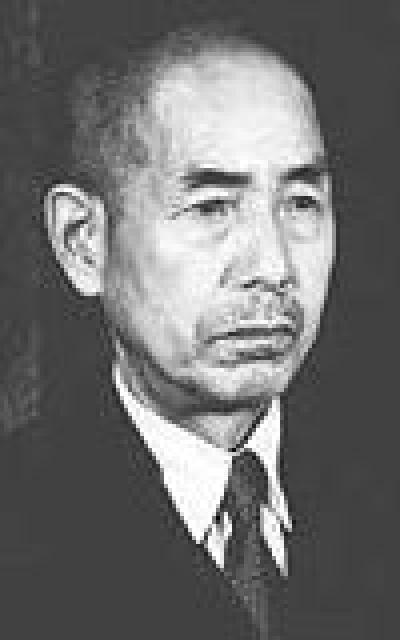
Syunroku Hata (1879-1962) was a Japanese military leader and marshal (June 2, 1944). He participated in the Russo-Japanese War of 1904-1905 and the military operations in the Far East during the Russian Civil War from 1918 to 1921.
Early Career
In 1921, Hata commanded the 16th Field Artillery Regiment, and from 1926 to 1927, he led the 4th Heavy Artillery Brigade. Between 1927 and 1931, he served as the chief of Japanese military intelligence in Manchuria. In 1932, he was appointed the head of the Kwangtung Army's gendarmerie, and from 1933 to 1935, he commanded the 14th Division in Manchuria. In August 1935, he became the commander of Japanese forces in Taiwan. Hata held extreme right-wing positions and was a staunch militarist.
Involvement in the 1936 Rebellion
Hata supported and participated in the rebellion organized by the "Young Officers' Group" from February 26 to February 29, 1936. In March 1936, he was dismissed from service but reinstated in 1937 as part of the Supreme War Council. From 1937 to 1938, he served as the Inspector General of Military Training.
Commander in China
During the planning of the general offensive in China in 1938, Hata was appointed commander of the Japanese forces deployed around Shanghai. In 1939, he became the chief aide-de-camp to Emperor Hirohito and a member of the Supreme War Council. On August 24, 1939, Hata became the Minister of War. On July 16, 1940, he submitted a request for retirement, which was supported by the high command of the army, sparking a government crisis that led to the resignation of Prime Minister M. Konoe's cabinet.
Commander of the Expeditionary Army in China
On November 10, 1941, Hata was appointed as the commander of the Expeditionary Army in China. He held significant authority in the army and conducted a series of successful (local) operations against the Chinese army from 1941 to 1942, hampering its actions and driving it out of several provinces. In April to July 1944, he led successful operations, including the Beijing-Hankou and Hunan-Guilin campaigns.
Later Career and Trials
From April 6, 1945, Hata served as the commander of the 2nd Combined Army, tasked with defending the Honshu Island (headquartered in Hiroshima). In April 1945, he was appointed the deputy chief of staff of the Japanese Army General Staff. On August 19, 1945, Hata arrived at the headquarters of the Soviet 1st Far Eastern Front for negotiations that established the terms and conditions of the Japanese surrender in China.
After the end of the war, Hata was arrested and appeared before the International Military Tribunal for the Far East in Tokyo. On November 12, 1948, he was sentenced to life imprisonment.