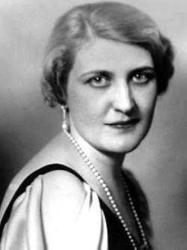
Sophie Blanchard
 France
Biography of Marie Blanchard
Marie Blanchard, also known as Sophie Blanchard, was a French balloonist and the wife of Jean-Pierre François Blanchard, a pioneer in ballooning. She was the first woman to become a professional balloonist and continued her husband's work after his death, completing over 60 flights. Blanchard gained European fame with her flights and even flew on behalf of Napoleon Bonaparte, replacing André-Jacques Garnerin as the "Aéronaute des Fêtes Officielles" (Aeronaut of Official Festivities). She also flew in honor of the restoration of the monarchy in 1814 and was named the "Officiel Aéronaute de la Restauration" (Official Aeronaut of the Restoration) by Louis XVIII.
Early Life and Marriage
Marie Madeleine Sophie Arman, later known as Sophie Blanchard, was born into a Protestant family in Trois-Canons, near La Rochelle. Little is known about her life before her marriage to Jean-Pierre François Blanchard, the world's first professional balloonist. The exact date of their marriage is unknown, with sources citing the beginning of 1794 or 1797, but most sources agree on 1804, the year of her first ascent in a balloon. Blanchard divorced his first wife, Victoria Lebrun, and their four children accompanied him on his travels throughout Europe, but it is known that Lebrun died in poverty.
Career as a Balloonist
Sophie Blanchard was described differently by various sources. She was initially described as a "small, ugly, and nervous wife" and later as a "small and beautiful" woman. Blanchard felt more at home in the sky than on the ground, often becoming excited and vulnerable on land. She feared loud noises and carriage rides but was fearless in the air. She experienced a crash with her husband in 1807, during which he sustained a head injury. However, she recovered from the shock after some time.
Blanchard's first balloon flight was with her husband in Marseille on December 27, 1804. The couple faced financial difficulties, as her husband's business was declining, and they believed that a female balloonist would attract more public attention and help solve their financial problems. She described her feelings during her first flight as an "incomparable sensation." Sophie Blanchard made her second flight with her husband and her third solo flight on August 18, 1805, in the garden of a Dominican monastery in Toulouse.
Although Blanchard was not the first woman to ascend in a balloon, she was the first woman to pilot her own balloon and make ballooning her profession. She became a favorite of Napoleon, replacing André-Jacques Garnerin in 1804. Garnerin had a failed flight during Napoleon's coronation in Paris, and the balloon drifted to Rome, resulting in jokes at Napoleon's expense. Sophie Blanchard held the title of "Aéronaute des Fêtes Officielles" and organized balloon displays for major events. She also possibly held the position of Chief Minister of Aeronautics, as she was reportedly involved in planning an aerial invasion of England. Blanchard made ascents in honor of Napoleon on June 24, 1810, in Paris and during a celebration for Napoleon's marriage to Marie-Louise of Austria. After the birth of Napoleon's son, Blanchard made an ascent from Paris and dropped leaflets announcing the event. She also flew in celebration of the baptism of Napoleon's son in Château de Saint-Cloud on June 23, 1811, and at the "Fête de l'Empereur" in Milan on August 15, 1811.
Blanchard continued to fly after her husband's death in 1809, specializing in night flights and often staying in the air overnight. She also conducted parachute experiments, often dropping puppies with parachutes. Other balloonists gained fame by parachuting from balloons, such as André-Jacques Garnerin's wife, daughter, and niece. Her main interest, however, was balloon ascents. By the time of her husband's death, the Blanchard family was in debt, and Sophie had to choose the most economical type of balloon. She used a hydrogen-filled balloon, as it allowed her to ascend in a small gondola without the need for a burner. The hydrogen balloon also did not require specific material for the balloon itself, unlike the gas-filled Montgolfier. Additionally, the hydrogen balloon's low weight allowed her to further reduce expenses. Prior to this, Sophie had used or owned a hot air balloon. Colonel François Maceroni recalled selling her a hot air balloon for 40 pounds in 1811.
Death and Legacy
Sophie Blanchard's death became widely known throughout Europe. She died on July 6, 1819, during a demonstration at the Tivoli Gardens in Paris. Her hydrogen balloon caught fire, and she fell from the balloon onto a roof and then onto the street below. Despite the efforts of onlookers to save her, she died either immediately from a broken neck or within ten minutes of the fall.
Her death was attributed to the fireworks attached to her balloon, as well as potential damage sustained by the balloon during ascent. Some speculated that she left the valve open, causing sparks to ignite the gas, or that her balloon had a weak structure that allowed gas to leak during ascent. After her death, the owners of the Tivoli Gardens announced that the proceeds from admission fees would be donated to her children. However, it was later discovered that she did not have any children, and the money was used to erect a monument with an image of a burning balloon in the Père-Lachaise Cemetery. The epitaph on her grave read, "Victime de son art et de son intrépidité" (Victim of her art and her fearlessness). The remaining funds, approximately 1,000 francs, were donated to the Lutheran Church, which Blanchard attended.
Despite her tragic death, Sophie Blanchard left a lasting impact on the history of aviation. Authors such as Jules Verne and Fyodor Dostoevsky mentioned her in their works. Her story served as a cautionary tale about the dangers of pushing boundaries and the price of vanity in performing such spectacular flights. Charles Dickens commented on her death, stating, "The pitcher often goes to the well but is broken at last." With the advent of engine-powered flights, balloonists like Sophie Blanchard and her story faded into aviation history. A novel about her life, titled "The Little Balloonist" by Linda Donn, was published in 2006.