Stacey Skinner
 Great Britain
- The Extraordinary Birth and Journey of Miles Skinner
- Doctors' Grave Prognosis and Funeral Planning
- A Successful Surgery and a Miracle Shrinkage
- Miles' Recovery and a Selective Diet
- Miles' Courageous Battle in Neonatal Intensive Care
- A Special Diet to Prevent Future Swelling
The Extraordinary Birth and Journey of Miles Skinner
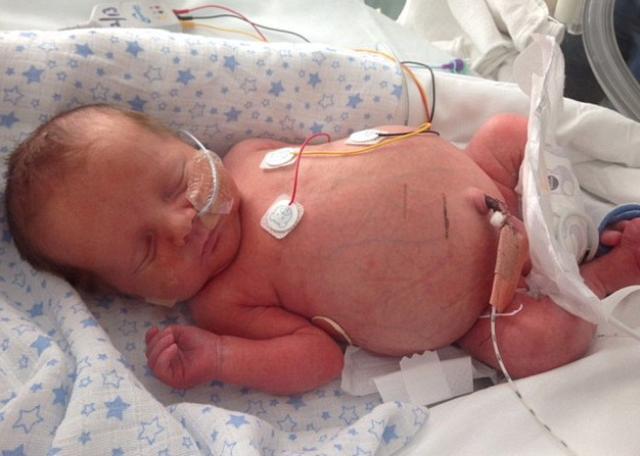
28-Year-Old UK Woman Stunned by Son's Enormous BellyStacey Skinner, a 28-year-old from Norwich, was in shock when she learned that her son, Miles, would be born with an unusually large protruding stomach. Due to a rare condition known as lymphatic ascites, the baby's belly distended inside the womb to an alarming degree.
Doctors' Grave Prognosis and Funeral Planning
Doctors informed the Skinners that with Miles' complex condition, he was unlikely to survive after birth. Grief-stricken, the parents began planning their unborn son's funeral.
A Successful Surgery and a Miracle Shrinkage
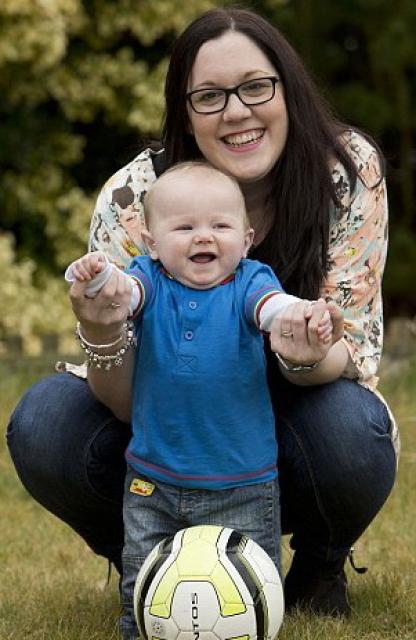
Surgeons drained nearly half a liter of fluid from Miles' stomach before delivering him via cesarean section. In the following 12 weeks, to the amazement of the medical team, the infant's belly gradually "deflated" to a normal size.
Miles' Recovery and a Selective Diet
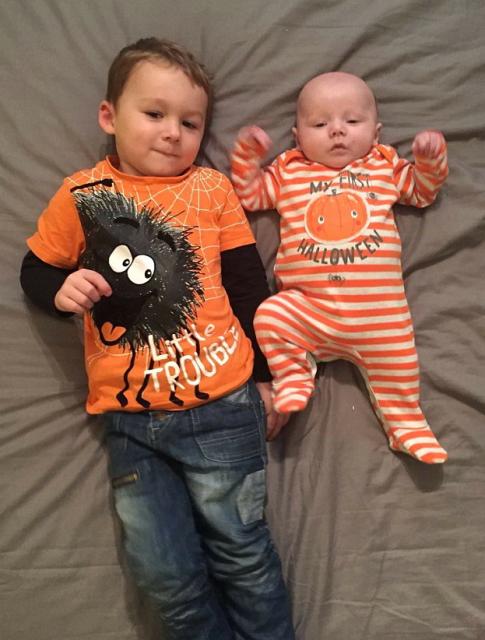
It took nine months for Miles to gain enough strength to be discharged home with his family. Stacey recalls, "The pregnancy was going really well, everything seemed normal, until we had our 4D scan and it all came tumbling down. Everyone in the room gasped when they saw how big his belly was. It was huge - just stuck out like a football." "At birth, they drained 400ml of fluid from his stomach before they could do the C-section," Skinner continues. "He had two hernias because of all the pressure that was on his body. He looked so swollen, just like a ball, at first. Once the fluid had been drained, he was tiny, just like any other premature baby, apart from the size of his belly. But thanks to the care from the medical staff, the swelling had started to go down after a few weeks in hospital." Miles suffered from lymphatic cysternia, a condition in which the body fails to break down fats, leaving them in a fluid state. As a result, he cannot consume any products containing high levels of fat or cow's milk protein. Milk and cheese were off-limits. The fetus had absorbed his mother's milk protein in the womb, causing Miles' stomach to bulge. Stacey says, "Looking at Miles on the scan should have been a happy moment, but instead it was just horrific. I couldn't stop crying... I was that swollen myself at the time I had to be on crutches most of the time just to cope with the pain."

Miles' Courageous Battle in Neonatal Intensive Care
After being born, Miles spent three months in the Neonatal Intensive Care Unit at the Norfolk and Norwich University Hospital, receiving around-the-clock care. For the first few weeks, he was given two doses of a 25ml medication to reduce his excessive swelling. It was only then that Miles' allergy to cow's milk protein was discovered. "The doctors gave Miles a tiny sip of milk," Skinner says, "and he came out in this horrible rash, a raised red rash. They tried him again, and the raised red areas blistered, as if they had been burnt. Miles struggled to breathe due to the pressure and strain on his body and looked like a tomato that had been inflated." Stacey adds, "I spent three months at his bedside, sitting with him, making sure he was okay. I couldn't leave him for a minute."
A Special Diet to Prevent Future Swelling
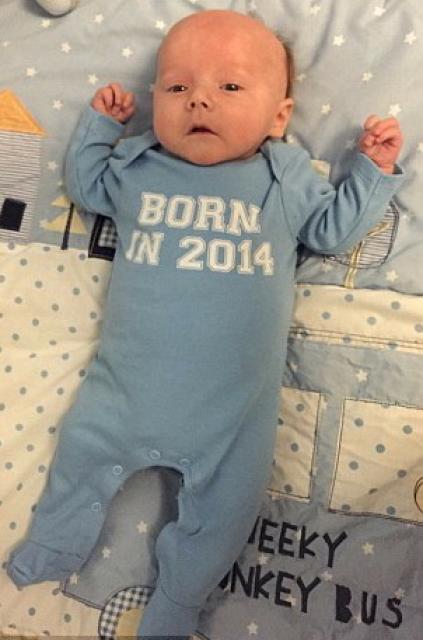
Upon Miles' discharge home, he was prescribed a selective diet to prevent recurring stomach swelling and a hernia, which could have put his life at risk again. "Now that Miles is home with us," Stacey explains, "he has a really restricted diet. Most mums find weaning their baby a difficult time, but with Miles it's an even bigger challenge. He can't have any milk or anything that is normally given to babies. He can have limited amounts of chicken, fish, egg whites, plain pasta, and vegetables." Stacey remarks, "We're hoping he will grow out of the milk protein allergy and eventually be able to eat normal food. The diet is definitely working as he didn't look like he was ready to give birth himself when he first came home." Miles' parents are preparing to celebrate their son's first birthday. However, instead of worrying about gifts, they have set their sights on raising money for the hospital that saved their son's life. The Skinners have already raised £2,000 for the Norfolk and Norwich University Hospital Neonatal Intensive Care Unit and for the Foetal Medicine Fund. Stacey says, "Miles doesn't necessarily need anything at the moment, so we thought we would try and raise money for the children's ward. They did such an amazing job with our little boy, and it's only right we do something to help other families." She continues, "I spent so much time in the hospital that I got to know the nurses and doctors quite well as they were so supportive. We would also like to thank the charity Bliss, who have been amazing throughout Miles' ordeal." "Miles also spent four days on the Buxton Ward over Christmas," Skinner adds, "after suffering from a virus which caused a respiratory infection and a horrible rash. We are so lucky to have the ward here. I can't thank the people who saved Miles enough." Emma Dolman, the Lead Nurse for the Buxton Children's Ward at the Norfolk and Norwich University Hospital, said: "We are so grateful to the Skinner family for thinking of us on the occasion of Miles' first birthday. We are delighted to hear he is doing so well and that the money raised will go towards improving the ward environment for tiny patients like Miles."