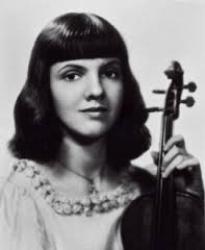
Stanislav Duchon
Stanislav Duchoň was a Czech oboist whose career took him through several of Prague’s major orchestras and into the country’s chamber music scene. Known for his work as an orchestral and solo performer, he won the principal prize in the Antonín Rejcha wind competition at the Prague Spring festival in 1953 and was again recognized as a Prague Spring laureate in 1963.
Training and early appointments
Duchoň was born on August 14, 1927, in Sobčice, in the Kolín district of what is now the Czech Republic. He studied oboe privately with Josef Děda and František Hanták from 1945 to 1948, then continued his training at the Academy of Performing Arts in Prague from 1948 to 1952.
His early professional work included a 1946–47 association with the Czech Philharmonic and playing English horn with Prague’s FOK Symphony Orchestra. From 1950 to 1952, he served as principal oboist of the Czechoslovak Radio Symphony Orchestra in Prague. These appointments placed him among the active young wind players in the capital’s postwar musical life.
Orchestra and chamber music
Duchoň appeared in the Prague Spring festival’s 1953 international Antonín Rejcha wind competition, where he received the main prize. The award brought wider recognition to a performer whose work ranged from orchestral playing to chamber music and recordings. He later became a laureate of the Prague Spring festival in 1963.
He collaborated with Czech musicians and ensembles on recordings of classical repertoire. Among the documented projects is a recording of Johann Sebastian Bach’s Musical Offering for Supraphon, issued across 1957–59. His chamber performances also included work with pianist and composer Ilja Hurník and the Czech Chamber Orchestra under Josef Vlach.
Later years and legacy
Duchoň remained associated with Czech musical life as a performer across the postwar decades. His career reflected the versatility expected of a leading oboist: orchestral positions, chamber collaborations, competition success, festival appearances, and recorded performances.
He died on January 29, 2020. His prize-winning performance at Prague Spring and his contributions to Czech orchestral and chamber music remain the central markers of his musical biography.