Stanislaw Przybyszewski
 Poland
Biography of Stanisław Przybyszewski
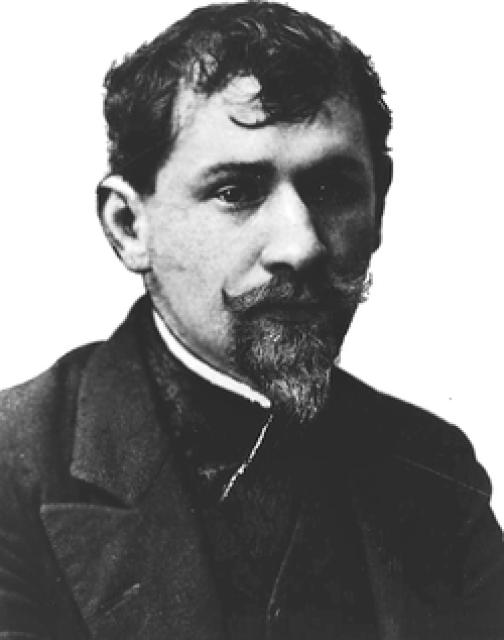
Stanisław Przybyszewski was a Polish writer and one of the leading figures of the literary movement known as "Young Poland." He was born in Prussian Poland, the son of a rural teacher. As a young boy, he started writing religious songs for the local Catholic church. Przybyszewski began his literary career in the 1890s in Berlin, writing in German. He then spent some time in Norway, where he became acquainted with August Strindberg. Upon returning to Berlin from Norway, Przybyszewski became the editor of the Polish newspaper "Gazeta robotnicza" (Workers' Newspaper), which had a strong social-reformist orientation with a nationalist bias. He wrote progressive articles in the style of biblical sermons.
In 1898, Przybyszewski settled in Krakow, where he edited the literary and artistic publication "Zycie" (New Life), which served as an organ for the Young Poland movement. He gained literary fame primarily as a German writer, becoming a standard-bearer of German modernism and receiving enthusiastic reception from the decadent youth. It has been noted by one historian of Polish literature that had Przybyszewski started writing in his homeland, he would have had little to no success. Polish society and critics, enthralled by Henryk Sienkiewicz at the time, would not have been able to appreciate the superhuman nature of his characters. Przybyszewski entered Polish literature as a writer with a European name, drawing interest as the epitome of Western culture.
His works initially appeared in German, such as "Homo Sapies," "Children of Satan," "Epipsychidion," "De profundis," and "Towards the Psychology of the Individual: I. Chopin and Nietzsche. II. Ola Hanson," among others. After relocating to Poland, Przybyszewski translated and revised his German works before writing new ones exclusively in Polish. His influence and fame continued to grow until 1905, after which they rapidly declined. Two dominant motifs can be found in all of Przybyszewski's works: painful eroticism and pseudo-revolutionary ideas that explore revolutionary themes, featuring anarchist types focused on destruction rather than furthering the revolutionary movement. His revolutionaries are not activists fighting for specific social ideals but rather "children of Satan" destroying the social order under the influence of mystical necessity emanating from mysterious satanic depths. "Children of Satan" destroy the social structure and fatally annihilate each other. Satanic revolutionary ideas are just as inevitable as sexual attraction, serving as the source of all wisdom while also leading to crime. Przybyszewski's works are characterized by recurring motifs of the highest pleasure followed by the fatal consequences of crime.
Przybyszewski's intense eroticism found expression primarily in his poems, such as "Over the Sea" [1899], "Androgyny" [1901], and "In the Hour of Wonder" [1902]. His imagined revolutionary ideas are expressed in novels such as "Children of Satan" [1897] and "Homo sapiens" [1898]. Przybyszewski's erotic and individualistic characters are moral bankrupts who capitulate to prevailing morality. This particular aspect of his work is most evident in his dramas, where he naturally had to consider bourgeois morality more than in his novels and prose poems, which targeted sophisticated aesthetes. These dramas, including "For Happiness" [1900], "The Golden Fleece" [1901], and "The Snow" [1903], are replete with Maeterlinck-like vague allusions and hints, using symbols to represent fate.
During the imperialist war, Przybyszewski attempted to find new material. In his essay "Poland and the Holy War," he expressed support for Polish-German unity but unsuccessfully tried to embody this new ideology in his artistic works, such as the book of war stories "The Return" [1916]. Here, Przybyszewski's old heroes — the erotics, the mystics, and the conscience-ridden individualists — seek to redeem their crimes with bloodshed on the battlefield.
Przybyszewski's last unfinished work was his memoir "My Contemporaries" [1926], which provides interesting material for characterizing German modernism, with which Przybyszewski was associated in the early years of his literary career. His creative efforts were primarily focused on revealing subconscious ecstatic states, depicting flashes of passion, artistic aspirations, self-flagellation, and more. Like all mystics, Przybyszewski's language deliberately lacks logical coherence. Thus, reading his works in an era devoid of such sentiments becomes almost impossible. Przybyszewski's language is not characterized by richness and, in the initial period of his literary career, is not free from noticeable German influence.