Vladimir Devyatov
 Russia
Biography of Vladimir Devyatov
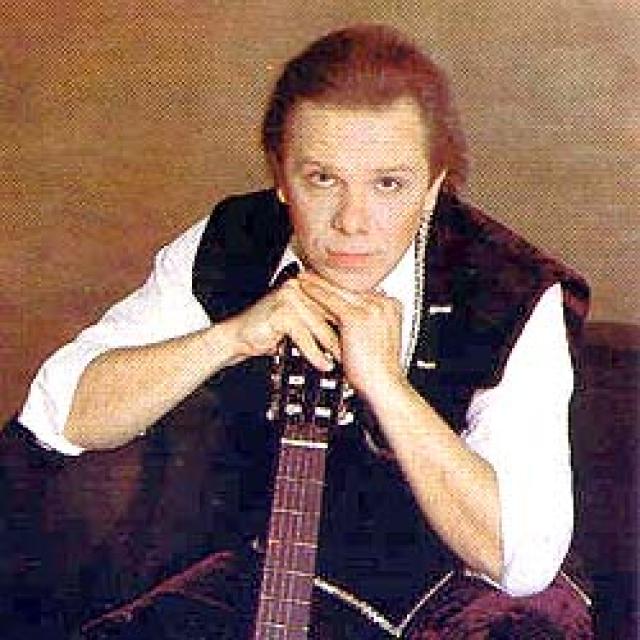
Vladimir Devyatov, a Russian singer and People's Artist of Russia, was born on March 15th in Moscow. He comes from a military family and was expected to continue the military tradition. After completing school, he attended the Military Academy of Chemical Defense and served as a chemist-technologist at a defense research institute in Moscow. However, alongside his military career, Devyatov pursued his passion for music.
During his school years, Devyatov attended a children's music school, where he studied the accordion. He also joined a school vocal and instrumental ensemble that played popular music influenced by bands like The Beatles and The Rolling Stones. He actively participated in amateur music activities during his college years while working on his scientific research. This period in Soviet music was marked by the emergence of numerous musical groups that blended traditional folk songs with contemporary rhythms and performance techniques.
Devyatov's unique and captivating Russian voice was discovered during this time, leading him to pursue a degree in solo folk singing at the Gnesin Russian Academy of Music. This marked the beginning of his new artistic biography. Devyatov's professional skills and talents were shaped and guided by his remarkable teacher, Professor Lyudmila Vasilyevna Shamina, who became not only his mentor but also a close friend.
Soon, Devyatov began to achieve success and recognition in his career. In 1985, while still in his second year at the institute, he formed the folk instrument ensemble "Russian Melodies" and became a laureate at the XII World Festival of Youth and Students in Moscow, the International Festival in Tbilisi, and the III All-Russian Competition of Folk Song Performers in Krasnodar. It is worth noting that winning competitions in folk singing was usually dominated by women. Devyatov's rare exception and exceptional talent were also recognized internationally when he was awarded the title of "Honorary Master of Arts of the International Academy of Sciences of San Marino" in 1995, making him the only representative of the Russian folk singing school to receive this honor.
In the same year, Devyatov was bestowed with the title of "Honored Artist of the Russian Federation," a high state commendation for his artistic achievements over the decade. During this time, he worked with the ensemble "Russian Melodies" under the Moscow State Concert Organization, performing concerts throughout Russia and solo programs in prestigious venues such as the State Kremlin Palace, the State Estrada Theater, and the Colonnade Hall. His Russian folk songs and romances captivated audiences in Germany, Belgium, Denmark, Australia, Austria, Israel, and Thailand. Devyatov's concerts and concert films were broadcasted on leading Russian television channels, and his voice became well-known to listeners of various radio stations.
In the late 1990s, Devyatov expanded his artistic repertoire in different directions. He released albums of Russian folk songs and romances in popular styles, incorporating contemporary recording techniques and pop singing styles. These albums achieved great success and popularity. Simultaneously, Devyatov embarked on a serious venture into classical music, performing romances and even operatic arias. His concerts in Moscow introduced him as a chamber singer specializing in the romances of composers such as Glinka, Tchaikovsky, Rimsky-Korsakov, and Rachmaninoff. While his interpretations differed from the traditional canon, they were praised for their richness and technical brilliance.
In 1998, Devyatov made his operatic debut in the premiere performance of Mussorgsky's "Boris Godunov," where he portrayed the character of Shuisky. He continued to collaborate with the "New Opera" theater, performing roles in Rubinstein's "The Demon" and other productions. Devyatov's versatile voice and technical abilities allowed him to excel in various genres, bridging the gap between classical and popular music.
Apart from his musical career, Devyatov has dedicated significant time and effort to community work. In 1995, he founded the Center for Russian Culture and Art, which aims to promote Russian cultural heritage through various projects, including the establishment of a children's school of folk singing, organizing concerts, competitions, festivals, and art exhibitions. Devyatov also supports young musicians and has established a scholarship for the most promising students at the Gnesin Russian Academy of Music.
Devyatov's achievements in music and contributions to Russian culture have been recognized and documented in various publications, including the encyclopedia "Modern Political History of Russia 1985-1997" and other media outlets. His solo concert at the Russia State Concert Hall in 1999, titled "Russian Caprice in the English Club," showcased his diverse talents and received praise from both audiences and the media. Devyatov continues to live and work in Moscow, and his artistic journey shows great promise for future successes in the 21st century.