
Stanley Earl Kramer
 USA
USABiography of Stanley Kramer
Stanley Kramer (full name Stanley Earl Kramer) was born in 1913 in New York City, USA. His childhood was not easy, as he grew up in a poor neighborhood with the ambiguous name of 'Hell's Kitchen'. His parents divorced when he was young, and he was raised by his grandparents. Additionally, he maintained a good relationship with his uncle, Earl Kramer, who worked at Universal Pictures. Stanley's mother also had a connection to the film industry, working as a secretary at Paramount Pictures.
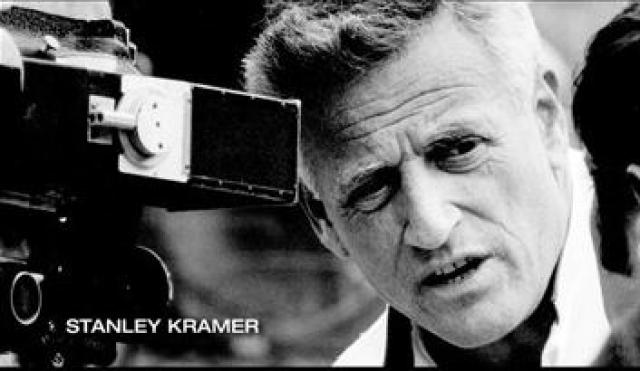
After completing his education at New York University, Stanley Kramer started his career as a clerk and later became an assistant scriptwriter. He then worked as an editor and director. During World War II, Kramer began making anti-fascist films himself. He showed great entrepreneurial spirit and managed to save enough money to open his own studio. After the war, he began creating his own films.

His first independent works in 1949 were the sports drama "Champion" starring Kirk Douglas and the war drama "Home of the Brave." "Champion" won an Oscar, a Golden Globe, and a Venice Film Festival award. Kramer's films were characterized by their social relevance, uncompromising nature, and remarkable authenticity, which attracted considerable attention from the film world.

As both a producer and director, Kramer made serious and thought-provoking films that addressed many important contemporary issues. Some of his notable directorial works include "Not as a Stranger" (1955), "The Pride and the Passion" (1957), and "The Defiant Ones" (1958), which won two Oscars for Best Original Screenplay and Best Cinematography in the same year. His historical drama "Judgment at Nuremberg" (1961) received numerous Oscar nominations and won two awards.

In 1963, Kramer ventured into a new genre - comedy. "It's a Mad Mad Mad Mad World" became a box office success and the second-highest-grossing film in America at the time. The film portrayed the dark side of the "American dream" with irony and slightly venomous humor, revolving around a mad three-hour race to find hidden treasures. This film was also successful in the Soviet Union, where Kramer was already known for his earlier works such as "The Defiant Ones," "On the Beach," and "Judgment at Nuremberg."
In 1967, he released the romantic drama "Guess Who's Coming to Dinner," which earned British Academy and Golden Globe awards for the performances of Spencer Tracy and Katharine Hepburn. Hepburn also won an Oscar for her role. In the 1970s, Kramer directed films such as the comedy-drama "Oklahoma Crude," the drama "The Domino Principle," and another brilliant drama, "The Runner Stumbles."
Throughout his career, Stanley Kramer created more than 40 films of various genres and directed about twenty of them. It is worth noting that despite numerous nominations and awards for his films, Kramer himself never received an Oscar. Nevertheless, his contribution to American cinema cannot be underestimated. He made vibrant and thought-provoking films that addressed complex social issues such as racism, Nazism, social injustice, and individual freedom. His films were known for their honesty and exceptional talent. "I am always in pursuit of a new dream, chasing after a new truth," Stanley Kramer once said.
Stanley Kramer passed away on February 19, 2001, leaving behind a lasting legacy in American cinema.


