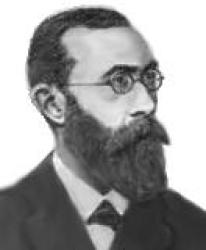
Stanley Smith Stevens
 USA
USA- Stanley Smith Stevens: Pioneer of Psychophysics and Measurement
- Contributions to Psychophysics and Measurement Scales
- Research and Impact at Harvard University
- Role in the Development of Operational Definitions
- Later Career and Legacy
Stanley Smith Stevens: Pioneer of Psychophysics and Measurement
Early Life and EducationStanley Smith Stevens was born on November 4, 1906, in Ogden, Utah. His fascination with psychology began during his undergraduate studies at Brigham Young University. He later pursued a doctorate at Harvard University, specializing in psychophysics, a field that examines the relationship between physical stimuli and sensory perception.
Contributions to Psychophysics and Measurement Scales
Stevens' most notable contribution was the development of the Theory of Measurement Scales. He proposed four levels of measurement: nominal, ordinal, interval, and ratio, each providing different degrees of quantitative information about variables. These scales have become essential in statistical analysis and the interpretation of research findings.
Research and Impact at Harvard University
As a Harvard professor, Stevens conducted groundbreaking research on human senses, particularly hearing and sound perception. His work on the psychophysical power law, which relates the magnitude of a physical stimulus to its perceived intensity, significantly advanced our understanding of sensory processes.
Role in the Development of Operational Definitions
Stevens also played a crucial role in promoting the use of operational definitions in psychology. He emphasized the importance of defining concepts in terms of observable and measurable operations, ensuring greater objectivity and consistency in research and communication.
Later Career and Legacy
Stevens was instrumental in establishing the Harvard Psychoacoustic Laboratory and served as one of the founders and organizers of the Psychonomic Society. His seminal textbook, "Handbook of Experimental Psychology" (1951), became a cornerstone of the field.
Despite his passing in 1973, Stevens' legacy continues to inspire and guide researchers in psychology. His work on measurement scales, sensory perception, and operational definitions remains influential in shaping methodological approaches and theoretical perspectives within the discipline.