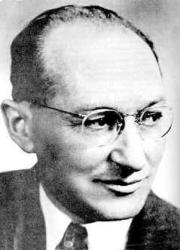
Wilhelm Wundt
 Germany
Biography of Wilhelm Wundt
Wilhelm Wundt was a German psychologist, physiologist, and philosopher who founded the world's first laboratory of experimental psychology at the University of Leipzig in 1879. He believed that psychology should be understood as a science of immediate experience, which could be accessed through careful and strictly controlled introspection. Wundt aimed to identify the "simplest elements" of consciousness (sensations and elementary feelings) and establish the fundamental laws of mental life, such as the "law of creative synthesis."
Wundt's approach to psychology was influenced by his background in physiology, which is why his psychology became known as "physiological psychology." However, he believed that the study of higher mental processes should be conducted using different methods, such as the analysis of myths, rituals, religious beliefs, and language. This perspective is reflected in his ten-volume work, "Psychology of Nations."
Wundt approached the psychophysical problem from the hypothesis of parallelism. Some of the notable individuals who studied under Wundt include E.B. Titchener, Oswald Külpe, Friedrich Krüger, Emil Mayman, Hugo Münsterberg, Vladimir M. Bekhterev, N.N. Lange, and Stanley Hall.