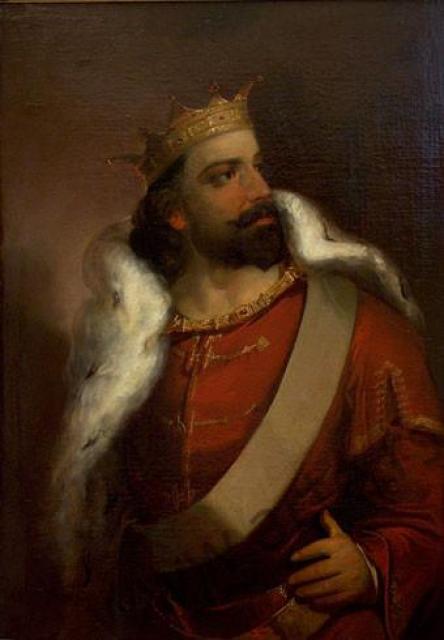
Stepfan Dushan
 Croatia
Stefan Dusan: The Golden Age of Serbia
Stefan Dusan was a Serbian king who reigned from 1331 and led Serbia to its highest point of prosperity and power in the 14th century. Under his rule, the borders of the Serbian state extended to the shores of the Ionian and Adriatic Seas in the west, crossed the Mesta River in the east, reached as far as Belgrade in the north, and encompassed parts of Central Greece and the Aegean Sea (Archipelago) in the south. In addition to Serbia, Dusan's empire included Bosnia and Herzegovina, Albania, Epirus, Thessaly, Macedonia (excluding Thessaloniki), a part of western Thrace, and the Halkidiki Peninsula with its famous monasteries in Mount Athos. Bulgaria, weakened at the time, posed no threat to him. However, Dusan was not content with his vast empire. He had long dreamed of conquering Constantinople and creating a great Greco-Serbian state on the Balkan Peninsula.
The Rise to the Title of Tsar
After his brilliant conquests, the title of Serbian king no longer satisfied Dusan. He declared himself the king of the Serbs and Greeks, and the Serbian archbishop was elevated to the rank of patriarch. The court life, modeled after Byzantine traditions, was characterized by grandeur and wealth. Dusan believed that he would encounter no significant obstacles in his quest to conquer Constantinople. However, he made a grave miscalculation as the Ottoman Turks, who had already seized most of Anatolia, posed a dire threat to both his European territories and his dream of a grand empire. Shortly before his death, Dusan suffered a defeat at the hands of the Turks, leaving him disillusioned and anticipating the collapse of his great endeavor.
Contributions and Legacy
Stefan Dusan's fame extends beyond his external policies; he also made significant contributions to the internal affairs of the country, particularly in the field of legislation. He translated numerous Byzantine legal monuments into Serbian and compiled a legal code, known as the Zakonnik, which was promulgated at a council attended by clergy, with the patriarch at the helm, and secular figures. The Zakonnik aimed to address the conditions of Serbian life but drew heavily from Byzantine sources. It clearly reflected the strong power of landowners, well-established serfdom, and major privileges granted to churches and monasteries. After Dusan's death, his state disintegrated and lost its strength due to internal turmoil and conflict. Thus, the third attempt to establish a powerful Slavic state on the Balkan Peninsula ended in complete failure, mirroring the earlier attempts made by Simeon the Great in the 10th century and Ivan Asen II in the 13th century.

