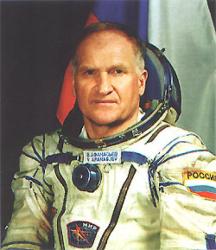
Stephen G. Bowen Bowen
 USA
Stephen G. Bowen is an American NASA astronaut and retired U.S. Navy captain whose career has taken him from nuclear submarines to the International Space Station. The first submarine officer selected by NASA for astronaut service, he has flown four missions and spent 227 days in space. Across ten spacewalks, he has helped maintain and expand the orbital laboratory, bringing the technical discipline of a naval engineer to some of the most demanding work outside Earth’s atmosphere.
Early life and education
Stephen Gerard Bowen was born on February 13, 1964, in Cohasset, Massachusetts. He graduated from Cohasset High School in 1982 and entered the United States Naval Academy. There he earned a bachelor’s degree in electrical engineering in 1986. His education continued at the Massachusetts Institute of Technology and Woods Hole Oceanographic Institution, where he completed a master’s degree in ocean engineering in 1993.
Bowen’s engineering training and interest in complex systems led him into submarine service. After completing the Navy’s submarine training pipeline, he served aboard USS Parche and qualified in submarines aboard USS Pogy. He later worked as engineering officer on USS Augusta, where he qualified for command of nuclear-powered submarines. His duties also included work with U.S. Special Operations Command and inspection of submarine propulsion systems. In 2000, he became the first executive officer of the pre-commissioning unit for USS Virginia, the first of a new class of attack submarines.
Selection as an astronaut
NASA selected Bowen as a mission specialist in July 2000, making him the first submarine officer chosen for the astronaut corps. After two years of training and evaluation at Johnson Space Center, he began technical work in the Astronaut Office’s Station Operations Branch. His background in engineering and close-quarters operations translated naturally to the International Space Station, where astronauts must maintain complicated machinery while living and working in a compact orbiting environment.
Bowen’s first spaceflight was the 2008 shuttle mission STS-126 aboard Endeavour. The crew delivered equipment that expanded the station’s living space and prepared it to house a larger crew, including a water recycling system, sleeping quarters, a galley, and exercise equipment. Bowen performed three spacewalks during the mission, helping with station assembly and maintenance.
He returned to space in 2010 on STS-132 aboard Atlantis, delivering supplies and a Russian research module. He performed two spacewalks to install equipment and replace batteries on the station’s solar array truss. In 2011, he flew on Discovery’s STS-133 mission, the final flight of that shuttle. Bowen was the first astronaut to fly on two consecutive shuttle missions, STS-132 and STS-133, after being assigned to replace a crewmember who had to leave the latter crew for medical reasons. On STS-133, he performed two more spacewalks as the crew delivered a permanent multipurpose module and a logistics carrier.
Commanding Crew-6
Bowen’s fourth mission began on March 2, 2023, when he launched aboard SpaceX’s Crew Dragon spacecraft Endeavour as commander of Crew-6. The international crew joined the International Space Station for a long-duration expedition, conducting scientific research, technology demonstrations, and station maintenance. Bowen served as a flight engineer during Expedition 69 and led the crew’s work through its six-month stay. He carried out three spacewalks to support upgrades to the station’s solar arrays before returning to Earth on September 4, 2023.
Across his four missions, Bowen logged 227 days in space. NASA records his ten spacewalks at a total of 65 hours and 57 minutes, placing him among the most experienced American spacewalkers by cumulative time outside a spacecraft. His spacewalking has included installing station components, replacing batteries, and preparing newer solar arrays, tasks that demand physical stamina as well as precise coordination with crewmates and ground controllers.
Personal life and legacy
Bowen is married to Deborah Alden, and they have three children. He has maintained close ties to both the Navy and NASA communities, bringing the practical habits of a submarine officer to his work in orbit. The connection between those worlds is more than a change of setting: both require crews to trust one another, manage technical systems in confined spaces, and respond methodically when a problem arises.
His career reflects a distinctive path into human spaceflight. Rather than arriving at NASA through aviation or academic research alone, Bowen came from years of service aboard submarines and from the engineering demands of nuclear-powered vessels. He became one of the shuttle program’s experienced spacewalkers and later commanded a commercial crew mission to the station. His four flights span the final years of the Space Shuttle era and NASA’s transition to regular crewed launches by private spacecraft, giving him a place in two generations of American human spaceflight.