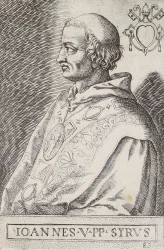
Stephen VII
Stephen VII, also numbered Stephen VIII in some historical lists, was bishop of Rome from around January 929 until his death in 931. A Roman and former cardinal priest of St. Anastasia, he held office during a period when powerful local families exerted heavy influence over the papacy. Only a few details of his life and work have survived.
A pope in a turbulent Rome
Stephen followed Leo VI, whose pontificate had lasted only about six months. Contemporary records identify Stephen as the son of Teudemund and a native of Rome. His election took place under the political dominance of Marozia, the Roman noblewoman who had imprisoned and displaced Pope John X before Leo VI’s accession.
The papal office was closely bound to Roman power struggles, leaving Stephen little room to shape events independently. The dates of his pontificate are usually given as 929 to 931, although sources differ on the precise months of his election and death.
Monastic privileges and final years
Among the few acts attributed to Stephen are privileges granted to monasteries in Italy and France, at a time when monastic reform was spreading across Europe. He died in February or March 931 and was buried at St. Peter’s Basilica in Rome.
Because the surviving record is so limited, Stephen’s pontificate is best understood as a short interval in a period of political control over the Roman church. His name remains in the papal lists, while the documented actions associated with him point to the ongoing importance of protecting monasteries and their rights.