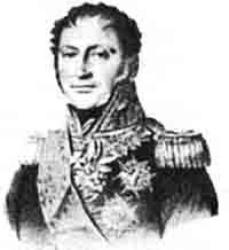
Sulla
Roman military and political leader
Country:  Italy
Italy
ItalyBiography of Lucius Cornelius Sulla
Early Life and Career
Lucius Cornelius Sulla was a Roman military and political figure. In 83 BC, he landed in Italy and defeated the armies of the consuls Norbanus, Marius the Younger, and Papirius Carbo. His victory gave him complete control over Rome, and he utilized the ancient magistracy of the dictator to establish his power. Unlike tradition, Sulla's dictatorship was not limited by term and was granted to him "for the enactment of laws and the restoration of the state." Sulla's dictatorship was accompanied by unprecedented terror in Rome, with thousands of Roman citizens falling victim to proscriptions, and entire tribes being exterminated.
Early Life and Education
Lucius Cornelius Sulla was born in 138 BC. From birth, he showed physical resemblance to his father and his ancestors, with his fiery red hair, milky skin covered in freckles, and a portrait-like resemblance to his father. His father symbolically raised him after his birth, signifying that he acknowledged the child as his own and took responsibility for his upbringing. Sulla was given the name Lucius Cornelius during a family ceremony when he was nine days old. He was also given a golden necklace, a symbol of his social status as a member of the patrician family, which was meant to protect him from harm.
Educational Background
Sulla's upbringing was primarily focused on instilling traditional aristocratic values. His family taught him to respect these values, and he learned about them through the examples of his ancestors. He received a comprehensive education in religious and social rituals, which he actively participated in. His mother provided him with basic knowledge of intellectual culture, while his maternal uncle maintained a close and affectionate relationship with him. In addition to his family, Sulla received lessons from his tutor, either a slave or his father. Once he had learned everything his family could teach him, it became necessary to provide him with a philosophical, legal, and especially rhetorical education to pursue a political career. He attended a school of Greek rhetoric, which was popular at the time. It is likely that his education culminated in a visit to Greece, where young aristocrats went to enhance their cultural knowledge before fully entering public life.
Marriages and Family
Sulla's marriages played a significant role in his personal and political life. His first wife was likely named Iulia, and she gave birth to their daughter, Cornelia. Not much is known about his first wife, as historical records are scarce. Sulla divorced her due to her infertility. His second wife was named Clelia and came from an old patrician family. It appears that Sulla held her in high regard, as their marriage was characterized by solidarity. However, their marriage eventually ended in divorce due to Clelia's infertility. Shortly after, Sulla married Cecilia Metella, a member of the powerful Metellus family. The marriage was a calculated move to align himself with the most influential plebeian family of the time. They had several children together.
Later Life and Legacy
Sulla's later life was marked by tragedy. When his wife Metella fell terminally ill, Sulla was forbidden from being near her due to religious restrictions. After their divorce, Metella was moved to a different house where she eventually passed away. Sulla disregarded the law he had enacted to limit extravagant spending on funerals and lavishly buried Metella. Despite the grief he experienced, Sulla's personal life did not impede his political responsibilities. He continued to lead Rome and make significant decisions that reshaped the state. The impact of his reign and the violent methods he employed had a lasting effect on Rome's political landscape and set precedents for future leaders.