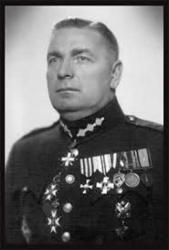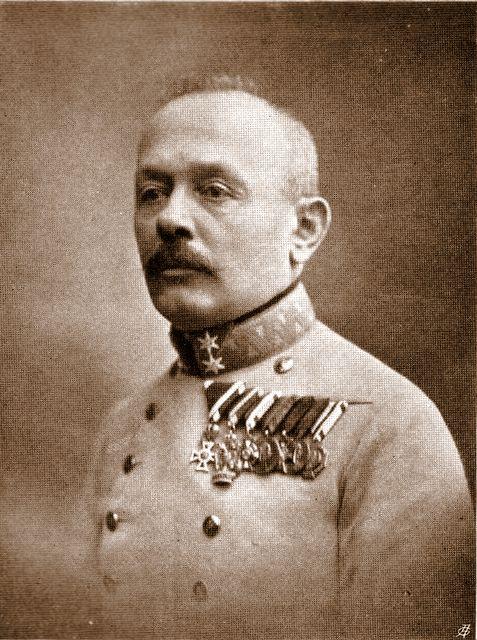
Svetozar Boroevic von Bojna
 Austria
- Early Life and Education
- Military Career
- Rise to Prominence
- World War I
- Italian Front
- Later Life and Death
- Legacy
Early Life and Education
Sветозар Boroević was born on December 13, 1856, in the village of Umetič, in the Military Frontier of the Austrian Empire (now part of Croatia). His father, Adam Boroević, was a frontier guard officer, and his mother, Stana, was a member of the small Serbian Orthodox community in the region.
Military Career
Boroević attended the Infantry Cadet School in Liebenau and was commissioned as a lieutenant in 1875. He served in the 52nd Hungarian Infantry Regiment in Graz and distinguished himself in the occupation of Bosnia and Herzegovina in 1878. In 1880, he was promoted to captain and attended the Vienna War Academy. He served in the General Staff from 1883 and on the staff of various infantry brigades.
Rise to Prominence
In 1899, Boroević married Leonhardine, daughter of Colonel Friedrich Ritter von Rossner. They had a son, Friedrich (Fritz). In 1904, Boroević became commander of the 12th Regiment of the Royal Croatian Home Guard. In 1912, he was promoted to general of infantry and commanded the VI Army Corps.
World War I
With the outbreak of World War I, Boroević led his corps as part of Auffenberg's 4th Army in the Battle of Galicia. In September 1914, he replaced General Rudolf Brudermann as commander of the 3rd Army, which had been defeated at Galicia. Under Boroević's command, the 3rd Army pushed back the Russian forces and relieved the siege of Przemyśl. However, the Russians soon counterattacked and forced Boroević to retreat again.
Italian Front
In June 1915, Boroević was transferred to the Italian Front and appointed commander of the 5th Army. He successfully defended against several Italian offensives. In 1917, he became commander of Army Group Boroević, consisting of the 1st and 2nd Isonzo Armies. On February 1, 1918, he was promoted to field marshal and replaced Archduke Eugen as commander-in-chief of the Italian Front.
Later Life and Death
After the collapse of the Austro-Hungarian Empire, Boroević sought citizenship in the Kingdom of Serbs, Croats, and Slovenes, but his request was denied. He died of a stroke in Klagenfurt in 1920 and was buried in the Vienna Central Cemetery.
Legacy
In 1916, Boroević was made an honorary citizen of Zagreb. He is remembered as one of the most successful Austrian generals of World War I, known for his defensive abilities and his ability to motivate his troops.