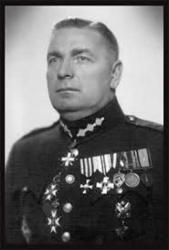
Sergey Gershelman
 Russia
- Early Life and Military Career
- Post-War Career
- Russo-Japanese War and Moscow Governorship
- Assassination Attempt and Later Career
- Personal Life and Legacy
Early Life and Military Career
Konstantin Ivanovich Hershelman was born into a noble family in Saint Petersburg, Russia. His lineage traced back to a German noble family from Thuringia. His father was a general-adjutant, and his brother, Friedrich Karl von Hershelman, became a general of cavalry and military writer.
In 1872, Hershelman graduated from the Imperial Page Corps with honors and was commissioned as a second lieutenant in the Life Guards Horse Artillery Brigade. In 1877, he joined the Nikolaev Academy of the General Staff but left to participate in the Russo-Turkish War.
During the war, Hershelman fought in the Plevna Detachment and the Western Detachment under General Iosif Gurko. He participated in battles such as Gorny Dubnyak and Telish. He was wounded and concussed in the Battle of Adrianople and was subsequently awarded the Order of St. Vladimir with Swords and Bow for his bravery.
Post-War Career
After the war, Hershelman resumed his studies at the Academy and graduated in 1881. He held various military positions, including commander of the 93rd Irkutsk Infantry Regiment and chief of staff of the Siberian Military District. In 1898, he was promoted to major general.
Russo-Japanese War and Moscow Governorship
With the outbreak of the Russo-Japanese War, Hershelman was promoted to lieutenant general (1904) and led a division to the Far East. He distinguished himself throughout the campaign, particularly at the Battle of Mukden, where he covered the retreat of the Second Army.
After the war, Hershelman was appointed commander of the 10th Army Corps. On January 15, 1906, he became commander of the Moscow Military District and subsequently its governor-general (July 5, 1906).
As governor-general, Hershelman cracked down on revolutionary activity, promoted the formation of monarchist organizations, and supported the Black Hundreds movement.
Assassination Attempt and Later Career
On November 21, 1907, Hershelman survived an assassination attempt. A bomb was thrown at his carriage as he traveled to the Lefortovo Military Hospital. The explosion killed the horses and seriously injured the terrorist responsible for the attack.
In 1909, Hershelman was appointed commander of the Vilna Military District. In 1910, he was promoted to general of infantry. He died in 1919 and was buried in the Alexander Nevsky Lavra in Saint Petersburg.
Personal Life and Legacy
Hershelman was married to Alexandra Vasilievna Poznanskaya (1861-1936). His sons fought in the First World War and the Russian Civil War. His son Vasily was killed in the Civil War, while his other sons, Sergei, Alexander, and Yuri, served in the cavalry. Sergei became a military historian in exile, and Alexander became a member of the Supreme Monarchist Council.