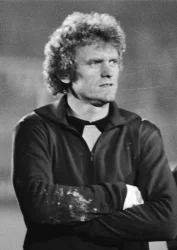
Takashi Kasahara
Takashi Kasahara belonged to a generation of Japanese footballers whose careers unfolded just as the sport was beginning to attract wider attention at home. A midfielder associated with Keio University, he represented Japan in 1940, during a brief and increasingly difficult period for international competition. His recorded national-team career is short, but it places him among the players who helped sustain Japanese football before wartime disruption brought the game’s progress to a halt.
Keio and early football
Kasahara was born in Japan on March 26, 1918. He played football while a student at Keio University, one of the leading institutions in the country’s early organized game. University sides and alumni teams were central to Japanese football in this era: they provided the structure for domestic competition and supplied many of the players selected for representative matches.
Kasahara was associated with Keio’s football community during a successful spell for its teams. Keio-affiliated sides won the Emperor’s Cup in 1939 and 1940, part of a period when the club was among Japan’s strongest. The records of early football often preserve team results more clearly than individual statistics, so the precise extent of his contribution to each campaign is not consistently detailed.
International appearance
In June 1940, while still connected with Keio, Kasahara was selected for Japan’s national team. He made his international appearance against the Philippines, in a match Japan won 1–0. The game came amid the celebrations planned around the Tokyo Olympic Games, which had been cancelled as war expanded across East Asia. The disruption soon made regular international football increasingly difficult.
Kasahara’s appearance is recorded as his sole cap for Japan. He did not feature in the celebrated 1936 Berlin Olympic team, whose comeback victory over Sweden became a landmark in Japanese football history; he represented a later generation, during a very different and more precarious moment for the sport.
Legacy
Few biographical details about Kasahara’s life beyond football have been preserved in widely accessible records, and his later years are not clearly documented. What remains is a small but meaningful trace: a Keio player who reached the national side at a time when Japanese football was building its identity and international ambitions. His brief appearance belongs to the story of a sport that, despite the turmoil of the era, continued to find players willing to represent their country.