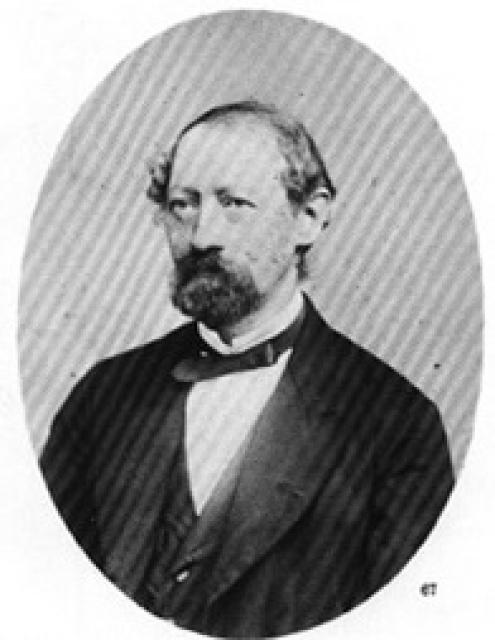
Tassilo von Heydebrand und der Lasa
 Germany
- Baron von der Lasa: German Chess Luminary
- Early Life and Diplomatic Career
- Contributions to Chess Theory
- International Chess Advocate
- Legacy as a Player and Organizer
- Personal Life and Legacy
Baron von der Lasa: German Chess Luminary
Baron Carl Friedrich August von der Lasa, a renowned German chess virtuoso, emerges as an influential figure throughout the 19th century.
Early Life and Diplomatic Career
Born in Berlin, von der Lasa initially pursued a legal education in Berlin and Bonn. However, his diplomatic acumen led him to serve Prussia in Sweden, Denmark, Brazil, and elsewhere. In 1864, he retired from diplomacy to dedicate himself to his true passion: chess.
Contributions to Chess Theory
Von der Lasa played a pivotal role in the creation of the seminal "Handbuch des Schachspiels" (1843) by Paul Rudolf von Bilguer. Upon Bilguer's untimely demise, von der Lasa completed the work, publishing it anonymously and overseeing five successive editions. This comprehensive tome profoundly shaped chess theory.
International Chess Advocate
During his extensive travels, which included a circumnavigation in 1887-1888, von der Lasa amassed an unparalleled chess library, compiling a comprehensive catalog in 1896. His crowning achievement was his groundbreaking "Zur Geschichte u. Literatur des Schachspiels, Forschungen" (1897), an authoritative work on chess history and theory. In recognition of his contributions, the German Chess Federation honored him as its first honorary member (1898).
Legacy as a Player and Organizer
As a player, von der Lasa did not achieve the same prominence as his fellow chess titans. Nonetheless, he engaged in notable unofficial games with masters such as Adolf Anderssen and Howard Staunton. His true impact lay in his role as a tournament organizer and administrator, ensuring the growth and development of competitive chess.
Personal Life and Legacy
Von der Lasa married Anna von Heldorf in 1831, and they had a son, Heinrich von Heydebrand und der Lasa. After his mother's death in 1880, Heinrich inherited extensive lands around what is now Leszno, Poland. He served as a chamberlain of the Prussian court and as a member of the Prussian Landtag's upper house. Baron von der Lasa's legacy continues to inspire chess enthusiasts to this day, solidifying his status as one of the most influential figures in the history of the game.




