Ted Carr
 Great Britain
- Career as Diplomat and International Relations Expert
- Historical Research and Publications
- Shift to the Left and Criticism of Capitalism
- Historical Influence and Legacy
Career as Diplomat and International Relations Expert
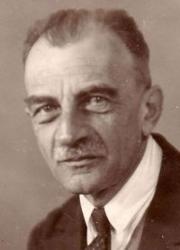
E.H. Carr: British Historian, Diplomat, and International ScholarEdward Hallett Carr (1892-1982) was a distinguished British historian, journalist, diplomat, and researcher of international relations. He served as a Commander of the Order of the British Empire (1920) and held various roles in the British Foreign Office from 1916 to 1936.
Carr's diplomatic career included postings to the French embassy and the British legation in Riga, Latvia. During his time in the Foreign Office, he played a pivotal role in shaping Britain's policy towards Russia during the Russian Civil War.
Historical Research and Publications
Challenging Empiricism and Marxist InfluencesAfter leaving the Foreign Office, Carr turned his focus to academia, becoming a professor of international politics at the University of Wales, Aberystwyth. He published his fourteen-volume "History of Soviet Russia" (1950-1978), a comprehensive study of Soviet history from its beginnings to 1929.
Carr's writings challenged traditional empiricist approaches to history, emphasizing the importance of subjectivity in historical interpretation. He also drew on Marxist ideas and developed a realist theory of international relations.
Shift to the Left and Criticism of Capitalism
Influence of Personal ConnectionsCarr's political views evolved over time. Initially a liberal and opponent of Marxism, he gradually moved to the left. This shift was influenced by his close relationships with Marxist intellectuals such as Isaac Deutscher, Karl Mannheim, and Harold Laski.
In his later years, Carr became increasingly critical of capitalism, calling it a "mad economic system" that was doomed to fail.
Historical Influence and Legacy
Contributions to Understanding Soviet RussiaCarr's analysis of the Russian Revolution and the emergence of the Soviet Union set him apart from other Western scholars of his time. He saw the revolution as a legitimate expression of the masses rather than a mere coup d'état.
Carr's work on history and international relations continues to be highly influential, challenging traditional historiography and providing a framework for understanding global power dynamics.