Tekuder
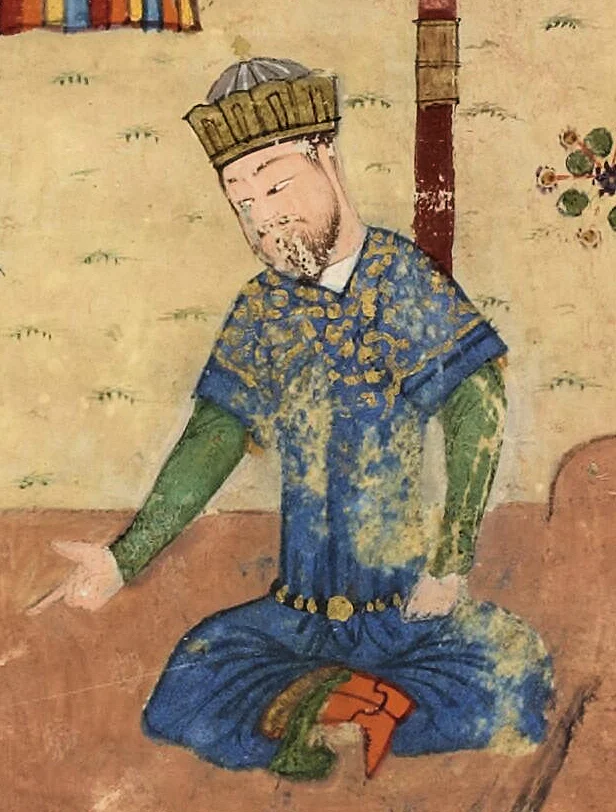
Tekuder, also known after his conversion as Sultan Ahmad, was the third ruler of the Mongol Ilkhanate in Iran. He became the first Ilkhan to embrace Islam and tried to change the direction of the state’s relations with its Muslim rival, the Mamluk Sultanate of Egypt and Syria. His reign lasted only two years, ending in a struggle with his nephew Arghun over power and the future of the dynasty.
A Mongol Prince Becomes Ilkhan
Tekuder was a son of Hülegü, founder of the Ilkhanate and grandson of Genghis Khan. His mother, Qutui Khatun, raised him in a court where several religious traditions were present. He eventually converted to Islam and took the name Ahmad, though the exact timing and circumstances of his conversion are not fully clear.
When his brother Abaqa died in 1282, the succession was contested. A council of Mongol nobles elected Tekuder, despite the opposition of Abaqa’s son Arghun. Tekuder was enthroned as Ilkhan later that year. His accession made him the first Muslim ruler of the Ilkhanate, but it did not immediately convert the Mongol elite or the population of his realm to Islam.
Diplomacy with the Mamluks
The Ilkhanate and the Mamluk Sultanate had been enemies for decades, competing for control of Syria and neighboring territories. Tekuder sought to reduce this conflict. He sent embassies to Cairo and proposed a diplomatic understanding with Sultan Qalawun. His conversion helped frame the outreach, but it did not erase the political and military interests that divided the two states. The negotiations did not produce a lasting peace.
At home, Tekuder faced resistance from Mongol commanders and members of the ruling family. His efforts to strengthen his own position, his treatment of rivals, and the competing interests of the military elite all contributed to instability. Religious difference was part of the political climate, but the conflict was not simply a contest between Islam and Mongol tradition; it also concerned succession, authority, and the power of the great commanders.
Fall and Death
Arghun continued to challenge Tekuder’s rule. In 1284, the dispute turned into open revolt. Tekuder’s forces eventually captured Arghun, but the Ilkhan chose not to execute his nephew. That decision did not end the rebellion. Arghun’s supporters broke his confinement and renewed the fight, ultimately capturing Tekuder.
A Mongol tribunal sentenced Tekuder, and he was executed on 10 August 1284. Arghun took the throne the following day. The new ruler condemned Tekuder’s conversion as a violation of ancestral Mongol law, though the accusation also served to legitimize his own victory.
Legacy
Tekuder’s reign was too brief to remake the Ilkhanate, but it marked an important moment in the gradual Islamization of Mongol Iran. His attempt to negotiate with the Mamluks showed that conversion could influence diplomacy without overcoming entrenched rivalries. Later Ilkhans, especially Ghazan, would make Islam central to the state on a much larger scale. Tekuder is remembered as an early turning point in that history and as a ruler whose religious choice became entangled with a bitter struggle for power.