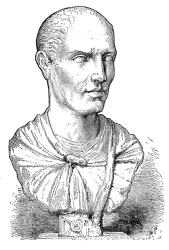
Tewodros II
- From Kassa to a Military Leader
- The Rise of an Emperor
- Reform and Resistance
- Diplomatic Crisis with Britain
- Maqdala and the Emperor’s Death
- Legacy
Tewodros II rose from the turbulence of Ethiopia’s “Era of the Princes” with a bold ambition: to reunite the country under a strong central government and equip it to meet the pressures of the modern world. A gifted military leader and determined reformer, he tried to build a national army, appoint salaried officials and limit the power of regional lords. His efforts brought him into conflict with the Ethiopian church, local leaders and, ultimately, Britain. His death at Maqdala in 1868 and the looting that followed made his reign one of the most dramatic episodes in Ethiopian history.
From Kassa to a Military Leader
Born Kassa Hailu around 1818, Tewodros came from Qwara in northwestern Ethiopia. His father, Hailu Walda Giyorgis, governed the province. Kassa studied in monasteries, learning scripture, Ethiopian history, law and tradition. He also gained military experience while campaigning with his older half-brother.
After his brother’s death, Kassa lost the family’s political position and spent years serving regional chiefs and fighting as a shefta, or outlaw, in the borderlands. Around 1845 he reconciled with Ras Ali Alula, who gave him the governorship of Qwara and his daughter, Tawabach, in marriage. Kassa soon rebelled against the regional order. In 1847 he defeated and captured Empress Menen Liben Amede, extending his authority across lands west and north of Lake Tana.
The Rise of an Emperor
From 1852, Kassa launched a decisive series of campaigns against the leading princes of central and northern Ethiopia. His victories at Gur Amba, Ayshal and Derasge dismantled the power of his principal rivals. On February 11, 1855, he was crowned emperor and took the name Tewodros II.
The choice of name carried a promise. Ethiopian tradition associated the name Tewodros with a future ruler who would end disorder and restore justice. Kassa had no royal ancestry, so he presented his rise as divinely ordained and framed his mission as the reunification of the Christian kingdom. His coronation marked a new attempt to rebuild central authority after decades in which regional lords had dominated national politics.
Reform and Resistance
Tewodros sought to replace a fragmented system of local rule with a more unified state. He aimed to make governors and judges salaried officials responsible to him, rather than depend on hereditary nobles and their private forces. He worked to create a standing national army and introduced changes in military organization and weapons. A gun foundry near his capital at Dabra Tabor became a symbol of his goal to manufacture modern arms at home.
He also attempted judicial and social reforms, including limits on collective punishment and measures against the slave trade. To pay for central government, he tried to reduce the extent of church landholdings. That policy provoked powerful opposition from clergy and the communities that supported them. His campaigns against rebellious rivals were often harsh, and his efforts to centralize rule alienated the very regional leaders and institutions whose cooperation he needed. The destruction of churches in Gondar and imprisonment of a bishop deepened the conflict with the Ethiopian Orthodox Church.
Tewodros’s political vision was ambitious, but his authority remained fragile. Provincial uprisings continued, and by the later years of his reign much of the country had slipped from his control. The emperor who sought to unite Ethiopia increasingly relied on force, a pattern that made reconciliation harder.
Diplomatic Crisis with Britain
Tewodros regarded Egyptian expansion near Ethiopia’s borders as a serious threat and hoped to secure technical and military support from European Christian powers. In 1862 he wrote to Queen Victoria proposing an alliance. The letter went unanswered. The silence, and his frustration with British representatives, convinced him that his diplomatic appeals were being ignored.
In 1864 he imprisoned the British consul Charles Cameron and several other Europeans, demanding a direct response and practical assistance. A British envoy, Hormuzd Rassam, arrived in 1866 to negotiate, but Tewodros later detained him and members of his party as well. The British government organized a large expedition led by General Robert Napier to secure the release of the captives. Britain’s objective was shaped by diplomatic pressure and imperial prestige, while Tewodros’s hold on the country was already weakened by internal rebellion.
Maqdala and the Emperor’s Death
The British and Indian expeditionary force landed on the Red Sea coast and crossed the difficult highland terrain toward Tewodros’s fortress at Maqdala. On April 10, 1868, the emperor’s remaining forces were defeated near the fortress by better-equipped troops using modern rifles and artillery. Tewodros released the European prisoners. Two days later, as Napier’s forces prepared to take Maqdala, the emperor dictated final letters. On April 13 he took his own life rather than surrender.
The British then captured and looted Maqdala, taking Ethiopian manuscripts, religious objects, crowns and other cultural treasures. Some of these objects entered British museums and collections, where their presence remains part of an ongoing discussion about restitution and colonial-era acquisition.
Tewodros’s young son Alemayehu was taken to Britain after the emperor’s death and placed under the guardianship of a British officer. He died in England in 1879, aged eighteen. The fate of the child added a personal dimension to the loss of Maqdala and the destruction of the imperial household.
Legacy
Tewodros is remembered in sharply different ways. Some accounts emphasize his cruelty and unpredictability; others see a visionary who sought to restore Ethiopian unity and build a modern state. Both the scale of his ambition and the costs of his rule are part of the record. He promoted military and administrative reforms, but his methods and inability to build durable alliances helped drive many potential supporters into opposition.
His project did not achieve lasting unification in his lifetime. Yet later Ethiopian rulers continued to pursue the centralization he had attempted, and his reign remains a turning point in the country’s modern history. Maqdala stands as both the scene of his final defeat and a reminder of the cultural losses inflicted during the British expedition. Tewodros’s life is therefore remembered not only as the rise and fall of an emperor, but as a struggle over sovereignty, reform and the future of Ethiopia.