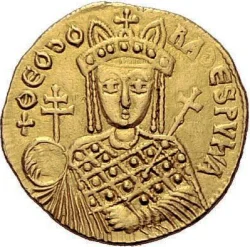
Theodora
Empress and imperial mother
Theodora was a Byzantine empress, the wife of Emperor Theophilos and the mother of their son, Michael III. Details of her birth and early life are uncertain, as surviving accounts were written largely by later authors. She became empress when Theophilos took the throne in 829, during a period of intense religious debate over the use of sacred images.
Theophilos supported iconoclasm, the movement that opposed the veneration of icons and at times led to their removal from churches and the punishment of their defenders. Later Byzantine narratives portray Theodora as a secret supporter of icons during her husband’s reign. Such stories are difficult to verify, but her actions after his death demonstrate that she favored restoring their public veneration.
Regency and the restoration of icons
Theophilos died in 842, leaving Michael III as a child. Theodora governed as regent alongside senior officials, including the logothete Theoktistos. In 843, she supported a council in Constantinople that restored the veneration of icons and deposed the iconoclast patriarch John VII. The decision brought the empire’s second major period of iconoclasm to an end.
The restoration became known as the Triumph of Orthodoxy and was commemorated in Byzantine worship. Theodora’s role made her a central figure in the Orthodox account of the controversy. Traditions also relate that she sought to protect or recall people punished for their defense of icons. Later religious accounts link her support to a final change of heart by Theophilos, though historians treat that story cautiously because it served to reconcile the emperor’s memory with the restored veneration.
Rule and legacy
Theodora remained an influential ruler for more than a decade. As Michael grew older, disagreements at court sharpened, particularly around the power exercised by Theodora and Theoktistos. In 856, Michael’s uncle Bardas helped remove Theodora from the regency. She was eventually compelled to retire from public life and enter a convent.
Theodora is remembered both as a political leader who governed during her son’s minority and as the empress associated with the restoration of icons in 843. The Orthodox Church venerates her as a saint. Her legacy reflects the close relationship between imperial authority and religious practice in Byzantium, where decisions made at court could reshape worship across the empire.