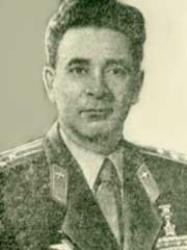
Theodore Van Kirk
 USA
USA- Early Life and Military Career
- Crew of 'Red Gremlin'
- 509th Bombardment Group
- Atomic Bomb Mission
- Impact of the Hiroshima Bombing
- Later Reflections
- Post-War Career
- Legacy
Early Life and Military Career
Theodore Van Kirk was born on February 27, 1921, in Northumberland, Pennsylvania. He became a cadet in the Army Air Corps flying program in October 1941. A year later, Van Kirk was assigned to the 97th Heavy Bombardment Group, home to the first operational British-made B-17 "Flying Fortresses."
Crew of 'Red Gremlin'
Van Kirk became a member of the "Red Gremlin" crew alongside Paul Tibbets and Tom Ferebee, who would also participate in the bombing of Hiroshima. From August to October 1942, Van Kirk flew eleven combat missions in England. On November 16, 1942, the "Red Gremlin" crew led their group in attacking the German base at Sidi Ahmed, Bizerte, Tunisia, catching the enemy by surprise.
509th Bombardment Group
Van Kirk returned to the United States in June 1943, having flown 58 combat missions. He served as a navigator-instructor until reuniting with Tibbets and Ferebee in the 509th Bombardment Group in late 1944. Under Tibbets' command, the group trained on the B-29 "Superfortress," with Van Kirk serving as the bombardier.
Atomic Bomb Mission
From November 1944 to June 1945, Van Kirk and his crew underwent rigorous training in preparation for the world's first atomic bomb drop. On August 6, 1945, after weeks of rehearsals, the crew embarked on a 13-hour mission that would change history. The "Little Boy" atomic bomb was detonated over Hiroshima at an altitude of 2,000 feet.
Impact of the Hiroshima Bombing
At the time of the bombing, Van Kirk was 24 years old. The blast instantly killed an estimated 70,000 to 140,000 people, with thousands more dying slowly from radiation sickness. In later interviews, Van Kirk recalled looking down at the horrific scene below, which he likened to a "pot of boiling tar," and thinking only one thing: "The war is over."
Later Reflections
In a 1995 interview with the New York Times, Van Kirk addressed the question of whether he would participate in an atomic bombing again. He responded, "If the same circumstances prevailed, I would." While not proud of his actions, he argued that if one is not willing to kill, one should not engage in war.
Post-War Career
After the war, Van Kirk completed his service in the Army Air Forces with the rank of major. He earned bachelor's and master's degrees in chemical engineering from Bucknell University in 1949 and 1950, respectively. Van Kirk spent the next 35 years in various engineering and management positions in DuPont's research and development and marketing divisions.
Legacy
Theodore Van Kirk died on July 28, 2014, at the age of 93. His legacy as the bombardier of the "Enola Gay" will forever be intertwined with the events of August 6, 1945. While his actions remain a subject of controversy, his personal reflections provide a glimpse into the complexities of war and the impact of such devastating events.