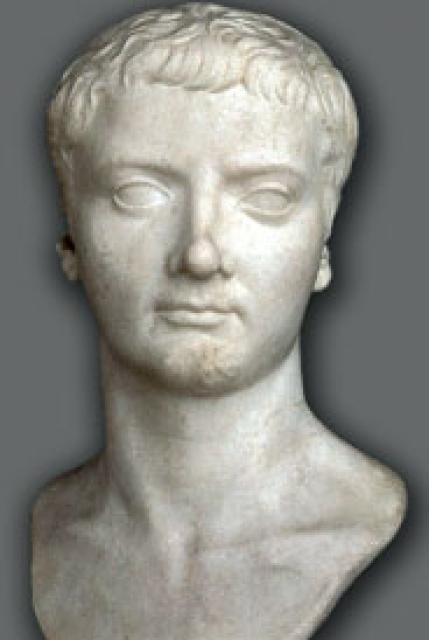
Tiberiy Neron
 Italy
Italy- Early Life and Political Career
- Military Service and Pontificate
- Aftermath of Caesar's Assassination
- Conflict with Octavian
- Alliance with Sextus Pompey and Return to Rome
- Divorce and the Marriage of Livia and Octavian
- Later Years and Legacy
Tiberius Claudius Nero: A Distinguished Roman Statesman and Military Commander
Early Life and Political Career
Tiberius Claudius Nero, a prominent figure in Roman society, was born circa 78 BCE into the patrician Claudian gens. His father, also named Tiberius Claudius Nero, held the office of praetor in 63 BCE and participated in Pompey's campaign against Mediterranean pirates.
Nero began his political career in 54 BCE by attempting to prosecute Aulus Gabinius for extortion. Although unsuccessful, he demonstrated his ambition and legal skills. Later, Nero served as patron to the city of Nysa in Asia and sought to marry Cicero's daughter, Tullia, but was rejected.
Military Service and Pontificate
In 48 BCE, Nero became a quaestor and the following year commanded a fleet for Julius Caesar in Alexandria. His success in this role earned him the support of Caesar and led to his election to the College of Pontiffs in 46 BCE. Nero also oversaw the settlement of Caesar's legions in Gallia from 46-45 BCE.
Aftermath of Caesar's Assassination
Upon Caesar's assassination, Nero initially supported the conspirators but later reconciled with Octavian. In 42 BCE, he held the office of praetor and married Livia Drusilla, a member of the noble Drusus family.
Conflict with Octavian
In late 42 BCE, Nero's conflicts with Octavian escalated, culminating in his flight from Rome and joining Lucius Antonius and Fulvia in the Perusine War. After Octavian's victory, Nero continued his resistance, attempting to incite slave rebellions in Praeneste and Naples.
Alliance with Sextus Pompey and Return to Rome
Nero's anti-Octavian activities led him to flee to Sextus Pompey in Sicily, but Pompey refused to acknowledge his praetorship. Nero then sought refuge with Mark Antony in Greece. Following the peace agreement between Antony and Octavian, Nero was granted permission to return to Rome.
Divorce and the Marriage of Livia and Octavian
Legend has it that Octavian was immediately smitten with Nero's wife, Livia, after her introduction in 39 BCE. After divorcing Scribonia on the same day his daughter was born, Octavian forced Nero to divorce Livia, who was pregnant at the time.
Later Years and Legacy
On January 14, 38 BCE, Livia gave birth to her son, Drusus, and on January 17, she married Octavian. Nero attended the wedding as his children's father. Nero continued to reside in Rome and possibly participated in the Illyrian War in 35 BCE. He passed away in 33 BCE, leaving behind a legacy as a distinguished statesman and military commander.


