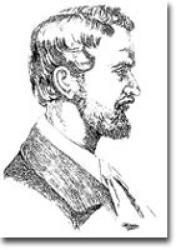
Tim Severin
 Great Britain
Biography of Tim Severin
Tim Severin, a British explorer, historian, and writer, gained recognition for his legendary journeys tracing the footsteps of famous historical figures. He was awarded the gold medal of the Royal Geographical Society (RGS) and the Livingstone Medal of the Royal Scottish Geographical Society (RSGS).

Tim Severin was born on September 25, 1940, in Assam, India. He studied at Tonbridge School and pursued history and geography at Keble College, Oxford. After graduating university in 1961, Severin, along with Stanley Johnson and Michael de Larrabeiti, embarked on a motorcycle journey through Asia, following the route of Marco Polo as described in his manuscript, 'The Description of the World.' From Venice, the friends made their way through Turkey, Persia, and Afghanistan, enduring sandstorms, floods, accidents, and even imprisonment. Severin and his companions crossed the Deh Bakri on camels and discovered hidden hot springs mentioned by Polo. However, due to visa issues at the Chinese border, the travelers were unable to complete their journey and returned to England by sea from Bombay.
In 1967, after exploring the mighty Mississippi River by canoe and motorboat, Tim Severin became convinced that the seven-year journey of Saint Brendan across the Atlantic Ocean was not a myth. He built a currach using traditional materials, Irish ash, and oak, and covered it with ox hide, using tallow to make it waterproof. Between May 1976 and June 1977, Severin and his team sailed the route of Brendan, covering 7200 km from Ireland to Peckford Island, Newfoundland, with stops in the Hebrides and Iceland. His book about this expedition became an international bestseller, translated into 16 languages.
Inspired by the legendary Sinbad the Sailor from 'One Thousand and One Nights,' Tim Severin embarked on his next adventure. After three years of studying Arab and Persian medieval ship designs, the British explorer constructed the sailship 'Sohar' with the financial support of Sultan Qaboos bin Said al Said of Oman. On November 21, 1980, the 'Sohar' set sail, and Severin's team navigated using the stars, covering 9600 km in eight months. During their voyage from Muscat to China, they encountered a grueling month-long calm, a broken ship's rib, and a near collision with a cargo vessel. In Guangzhou, Severin arrived on July 6, 1981.
Based on the epic poem 'Argonautica,' a grand replica of an ancient Greek vessel was built, and in 1984, Tim Severin, along with 20 rowers, retraced the route of Jason and the Argonauts. In 1985, he followed the footsteps of Odysseus. To commemorate the 800th anniversary of Genghis Khan, Severin embarked on a walking journey along the once-used courier route of the Mongol Empire.
In May-November 1993, Severin sought to prove that Asian sailors reached the shores of America about 2,000 years ago using only bamboo rafts. However, they encountered monsoons, pirates, and typhoons that caused the bamboo and rattan raft to deteriorate in the middle of the Pacific Ocean. After covering 8,850 km in 105 days, Tim and his team had to abandon their further voyage.
Finally, in 1999, Severin discovered that most of the accounts in Herman Melville's novel 'Moby Dick' about the whaling ship 'Pequot' were borrowed or fabricated. For his book 'The Sindbad Voyage' in 1982, Tim Severin earned the Thomas Cook Travel Book Award.