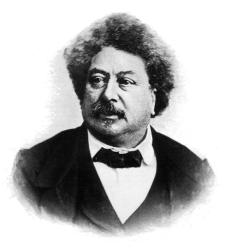
Tokutomi Roka
 Japan
Japan- Tokutomi Roka
- Literary Career
- Influence of Tolstoy
- Rural Interlude
- "Kuroshio" and Its Themes
- Later Years and Legacy
Tokutomi Roka
Early Life and EducationTokutomi Roka was born in Higo Province (present-day Kumamoto Prefecture) and studied at Doshisha University. He received a diverse education, studying ancient Chinese Confucian and Buddhist texts under his father's influence and later embracing Christian ideas in European school.
Literary Career
Roka moved to Tokyo and joined the magazine "Kokumin no Tomo" ("Friends of the People"), founded by his elder brother Tokutomi Soho, a prominent journalist and publicist. His debut novel, "Better Not Be Alive" (1899), achieved immense success and remained a bestseller for decades, with translations published in St. Petersburg, Boston, Milan, and Helsinki.
Influence of Tolstoy
Inspired by Leo Tolstoy's literary theory, Roka believed in the importance of novelty in content and form and the author's sincere approach to their subject matter. His fascination with Tolstoy's work led him to visit the Russian writer at his estate in Yasnaya Polyana in 1906.
Rural Interlude
Upon returning home, Roka attempted to live a similar lifestyle to Tolstoy. With his wife, he left Tokyo and settled in a village, practicing agriculture. However, their experiment as hermits proved unsuccessful, and Roka eventually prospered as a landowner. He later criticized his own actions in a series of stories entitled "Murmurings of an Earthworm" (1913).
"Kuroshio" and Its Themes
Roka's other notable work, "Kuroshio" (1902), explored two parallel issues: corruption and political stagnation in the ruling elite and the subjugation of women in Meiji Japan. The novel became an important critique of society and an advocate for reform.
Later Years and Legacy
Roka continued writing and publishing throughout his life, becoming a respected literary figure in Japan. His works addressed various themes, including Christianity, social criticism, and the search for meaning in a rapidly changing world. His writings remain influential in Japanese literature and provide valuable insights into the complexities of Meiji Japan.