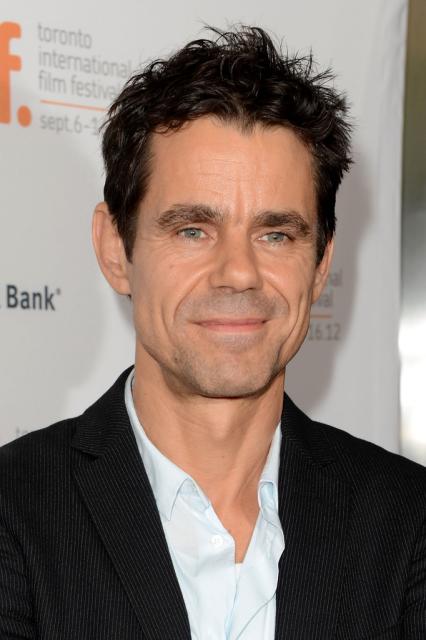
Tom Tykwer
 Germany
- Biography of Tom Tykwer
- Early Life and Career
- Early Films and Breakthrough
- Hollywood and International Success
- Continued Career
Biography of Tom Tykwer
Director, composer, screenwriter, producer, cinematographerTom Tykwer is the most prominent representative of German postmodernism. With his arthouse films made with Hollywood flair, he has proven that European cinema can be not only esoteric for the chosen few, but also captivating and stylish entertainment. Tykwer writes his own music and scripts, directs, and edits his films. And it all comes easily and effortlessly to him.

Early Life and Career
Tom Tykwer was born in Wuppertal, Germany, on May 23, 1965. He has had a passion for filmmaking since childhood. When he was 11, his parents bought him an 8mm camera, and he started making amateur films. He enlisted his relatives and friends as actors and assistants. At the age of 14, Tykwer started working as a cleaner in a cinema. He had the keys to the theater, so he could watch all the films being screened there. His obsession with cinema even led to him skipping school, which made his graduation a challenge.

In search of a better life, Tykwer moved to Berlin, where he started working in cinemas and television. In 1987, he began programming at the renowned cinema "Moviemento." It was there that Tykwer met producer Rosa von Praunheim, who helped him bring his first projects to life.

Early Films and Breakthrough
Tykwer's first short film, "Because" (1990), was based on his own experiences in a romantic relationship. The film was screened at the Hot Film Festival and received rave reviews from both critics and audiences. This gave the budding director confidence in his abilities and a realization that he was on the right path.

In 1993, Tykwer released his first feature film, "Deadly Maria," which was shown on television and had a limited theatrical release. Although the film won him an award from the German Association of Film Critics, it did not bring commercial success. However, it established Tykwer as a talented director with his own style and signature.

In 1994, Tykwer, along with Stefan Arndt, Dani Levy, and Wolfgang Becker, founded the company "X Filme Creative Pool," under which he released his second film, "Winter Sleepers" (1997). The thriller received positive reviews but did not gain widespread recognition.

Tykwer's breakthrough came with the release of "Run Lola Run" (1998). This incredibly vibrant adrenaline-fueled thriller, starring young actors Moritz Bleibtreu and Franka Potente, tells the story of a girl trying to save her boyfriend from trouble. With very little time, any impulsive decision can have fatal consequences. The film was stylistically shot like a music video and had a fast-paced plot, with techno music constantly playing in the background, mirroring the pulse of the running protagonist. Critics wrote that German cinema had been waiting for such a film for 20 years. The film received eight national awards and was nominated for the Golden Lion at the Venice Film Festival. It recouped its production costs in the first week of release.

After filming "Run Lola Run," Tykwer and Franka Potente began a romantic relationship that lasted for two years. Potente also appeared in Tykwer's film "The Princess and the Warrior" (2000), after which their creative collaboration ended.
Hollywood and International Success
Tykwer's next film, "Heaven" (2002), was financed by Miramax, a Hollywood production company. He convinced Miramax to produce the film, which was based on an unrealized script by Polish director Krzysztof Kieslowski. The film received critical acclaim at the Berlin Film Festival, although it did not win the top prize. Despite its success in Europe, "Heaven" did not perform well at the box office in the United States.
In 2006, Tykwer released his most challenging film to date, "Perfume: The Story of a Murderer," based on the acclaimed novel by Patrick Süskind. The film was deemed unadaptable by the renowned English director Stanley Kubrick, who believed that it was too difficult to convey the descriptions and properties of scents on screen. Nevertheless, Tykwer managed to create a believable adaptation of the famous novel, although not perfect. The film became a hit in Europe, grossing $130 million at the box office.
Following two unsuccessful films, "The International" (2008) and "Three" (2010), Tykwer embarked on his most ambitious project, "Cloud Atlas" (2012). The film was a collaboration with the Wachowski siblings, known for "The Matrix" trilogy. Tykwer directed the segments set in the 20th century, while the Wachowskis directed the 19th-century and futuristic storylines. The film was based on David Mitchell's novel and consisted of six interconnected stories set in different times. Tykwer described the film's plot as being about the idea of soul reincarnation. The film received praise for its editing and visual effects, which were executed flawlessly. At the Toronto International Film Festival, the audience gave the film a standing ovation that lasted for 10 minutes. However, it failed to find success in wide release, as audiences likely did not understand the directors' vision. Interestingly, a significant portion of the film's budget, which amounted to $102 million, was financed by independent sources. As a result, "Cloud Atlas" became not only the biggest blockbuster in Germany but also one of the largest independent projects in contemporary cinema.
Continued Career
Despite recent commercial disappointments, Tom Tykwer shows no signs of giving up on filmmaking. It is his passion, and he excels at creating stylish, vibrant, and original films that make the hearts of audiences beat faster. In addition to directing, Tykwer continues to write music, not only for his own films, but with limited success. His true talent lies in crafting captivating cinematic experiences.


