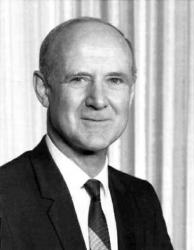
Tomas Andrus
 Ireland
- Early Life and Education
- Medical and Academic Pursuits
- Royal College of Belfast and Vice-Presidency
- Critical Phenomena and the Nature of Matter
- Experimental Techniques and Impact on Scientific Thought
Early Life and Education
Born in Belfast, Ireland, Thomas Andrews pursued his passion for chemistry at the University of Glasgow. Demonstrating his brilliance, he conducted notable chemical experiments in his home laboratory shortly after matriculating. Eager to deepen his knowledge, he embarked on a journey to Paris, where he honed his skills under the mentorship of Alexandre Dumas and studied medicine at a hospital.
Medical and Academic Pursuits
Upon his return to Ireland, Andrews continued his academic endeavors at Trinity College Dublin and the Irish School of Medicine, culminating in a doctorate in medicine from the University of Edinburgh at the age of 22. Subsequently, he became a professor of chemistry at Queen's College Belfast in his hometown.
Royal College of Belfast and Vice-Presidency
In 1845, Andrews was appointed Vice-President of Queen's College Belfast, a position he held until his retirement in 1879. During his tenure, he made significant contributions to the institution's growth and reputation. He dedicated his life to education, inspiring generations of students.
Critical Phenomena and the Nature of Matter
Andrews' groundbreaking research in the field of physical chemistry established his legacy as a pioneer. His pivotal 1869 paper, "On the Continuity of the Gaseous and Liquid States of Matter," challenged the conventional dichotomy between gases and liquids.
Through meticulous experiments, Andrews demonstrated that under certain conditions, gases could transition continuously into liquids without any abrupt changes in volume or temperature. This discovery shattered the long-held belief that gases and liquids were fundamentally distinct states of matter.
Andrews further postulated that critical phenomena, such as the critical point where the properties of gases and liquids merge, represent a continuum rather than a sharp boundary. He believed these phenomena shed light on the fundamental nature of matter and its various states.
Experimental Techniques and Impact on Scientific Thought
Andrews' experimental approach to studying critical phenomena involved high-pressure experiments aided by a mechanical compressor. By varying temperature and pressure, he was able to observe the continuous transition between the gaseous and liquid phases.
His work profoundly influenced the development of scientific thought, particularly in the realm of thermodynamics and the nature of matter. Friedrich Engels hailed Andrews' discovery as a crucial step in the transition from a metaphysical to a dialectical understanding of the world.