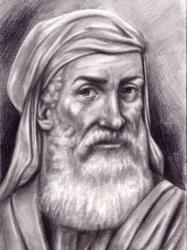
Tommaso Campanella
 Italy
ItalyBiography of Tommaso Campanella
Italian philosopher and writer, Tommaso Campanella, was one of the early representatives of utopian socialism. He was born in Calabria and joined the Dominican order in his early youth. However, he soon displayed a great inclination towards free thinking in religious matters, which earned him the hatred of theologians and forced him to leave his homeland.
In 1598, upon returning to Naples, Campanella was captured along with several other monks and put on trial for sorcery and conspiring to overthrow the Spanish rule and the existing social order in order to establish a republic. After enduring multiple tortures, he was sentenced by the Inquisition to lifelong imprisonment and spent 27 years in prison until he was released in 1626 thanks to the intervention of Pope Urban VIII.
Campanella spent the rest of his life in France, where he received a pension from Cardinal Richelieu. His last work, a Latin poem celebrating the birth of the dauphin (future Louis XIV), was published. Most of Campanella's writings were written in prison and later published by his student, Adamo. His political and economic views are presented in "Civitas Solis" (The City of the Sun), "Questiones sull' optima republica" (Questions on the Best Republic), and "Philosophia realis" (Real Philosophy). Their distinctive feature is a mixture of fantastic elements with a realistic understanding of life.
"Civitas Solis" depicts an ideal country, the City of the Sun, in the form of a novel. The inhabitants of this city-state lead a "philosophical life in communism," where everything is shared, including women. By eliminating property, many vices are eradicated, and all sense of self disappears while love for the community flourishes. The people are governed by the Supreme High Priest, called the Metaphysician, who is chosen from among the wisest and most learned citizens. Assisting the Metaphysician is a triumvirate of Power, Wisdom, and Love, who oversee all aspects of the country's political and social life. Power is responsible for matters of war and peace, Wisdom guides the sciences and education, and Love takes care of education, agriculture, and food production, as well as the arrangement of marriages to ensure the birth of the best children.
Campanella finds it strange that people care so much about the breeding of horses and dogs but neglect the "human breed," and he believes it is necessary to carefully select the individuals who will form unions to produce children for the perfection of future generations. In the City of the Sun, priests are in charge of this and determine who should temporarily unite in marriage to procreate. Additionally, women who are found to be infertile become common wives.
Similarly to Campanella's vision for the City of the Sun, he envisions the rest of the world as a unified global state. He believed that Spain and the Spanish king were destined for global political dominance, alongside the establishment of worldwide papal rule. This idea was developed in his work "De Monarchia Messiae" (On the Monarchy of the Messiah) and reappeared later in the history of socialism in the teachings of sensimonists.
Campanella's philosophy is a unique combination of the three main directions of the new philosophy of his time: empiricism, rationalism, and mysticism, which were separately represented by his younger contemporaries Francis Bacon, René Descartes, and Jakob Böhme.
In addition to his philosophical significance, Campanella was a staunch defender of Galileo and a "forefront fighter" against the positive sciences of his time, a position that even Descartes did not dare to take.