Simone Weil
 France
Biography of Simone Weil
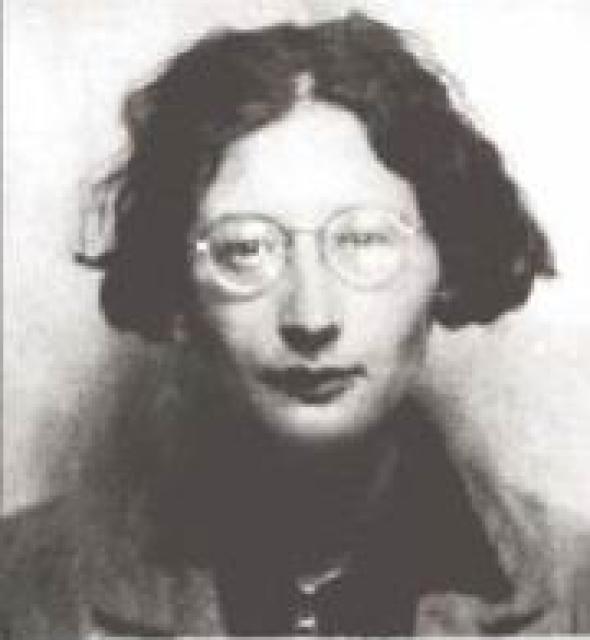
Simone Weil was a French philosopher and religious thinker, as well as the sister of mathematician Andre Weil. She attended the École Normale Supérieure, where she studied philosophy and classical philology. After graduating, she taught philosophy and became a supporter of Marxism, Trotskyism, and anarchism.
In 1934-1935, Weil worked as a factory laborer in order to understand the life of the proletariat. She wrote about the harsh working conditions in left-wing newspapers. From 1936 to 1939, she participated in the Spanish Civil War on the side of the Republicans. The successes of Franco and the intervention of the Soviet leadership dealt a severe blow to her worldview. She became disillusioned with the ideas of socialism and communism.
In 1938, during Holy Week, Weil, who was once Jewish and an atheist, became a supporter of Christianity. She did not join the Church or get baptized, but believed that it was possible to be a Christian outside of organized religion. During World War II, she lived in a Dominican monastery in Marseille and was involved in the Resistance. In 1942, she fled to England and joined the Free French forces led by Charles de Gaulle. She prepared radio broadcasts for them, although she did not completely share de Gaulle's beliefs.
As a sign of solidarity with the prisoners of fascism, Weil restricted her food consumption to the level of rations in Hitler's concentration camps. This led to her premature death from heart failure complicated by tuberculosis. In addition to Christianity, her beliefs were influenced by Jewish and ancient Greek mysticism, as well as Hinduism and Buddhism. However, Weil had a negative attitude towards the ritualistic aspects of religion. She focused primarily on the question of suffering, especially the suffering of the innocent.
In her early years, Weil approached this question from a Marxist and socialist perspective, believing in the need for social reorganization. Later, she believed that the main necessity was to restore the connection between humans and nature and society, or what she called "roots," which are eroded by the influence of money, power, and ideology. One of the methods Weil believed in for restoring these roots was the "spiritualization of work." She compared work to death and communion.