
Tony Allen
 Nigeria
- Tony Allen
- Early Life and Musical Development
- Collaboration with Fela Kuti
- Solo Career and Experimentation
- Influence and Collaborations
Tony Allen
Nigerian drummer, composer, and poet-songwriter Tony Allen is still considered one of the greatest drummers of his time - and of music in general. Allen became famous not only for his drumming skills, but also for his outstanding talent as a composer and for creating two whole music genres. Tony Oladipo Allen, a Nigerian drummer, composer, and poet-songwriter, currently lives and works in Paris. In 2013, he described his life and career in the autobiographical book "Tony Allen: Master Drummer of Afrobeat," co-written with writer and musician Michael E. Veal.

Early Life and Musical Development
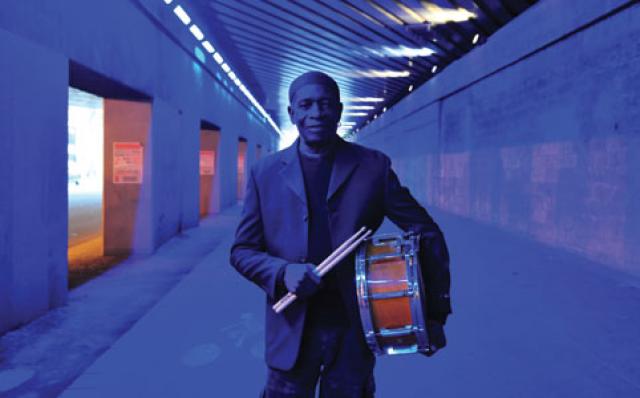
Tony Allen taught himself music and started playing drums at the age of 18 while working as an engineer at a Nigerian radio station. His father's favorite music, juju, the traditional ceremonial music of the Yoruba tribe, had a significant influence on Allen's musical development. However, he also gave credit to American jazz and other popular music genres. Through diligent work, Tony Allen was able to create his own unique drumming style. He studied the works of other musicians, including the legendary Ghanaian drummer Guy Warren, to shape his style.
Collaboration with Fela Kuti
In 1964, Fela Ransome Kuti, who was familiar with Allen through their performances in Lagos, invited him to audition for his jazz group. Kuti was highly impressed by Allen's ability to effortlessly blend jazz and highlife, and together they formed the new band Koola Lobitos. The group changed its name to Africa '70 during a trip to the United States in 1969 and incorporated elements of soul, jazz, highlife, and polyrhythmic patterns from the Yoruba tribe into their music. Allen modified his style to fit the new direction of the band. The collaboration between Kuti and Allen was mutually beneficial and had a significant influence on music as a whole. Allen essentially became one of the creators of a new music genre called Afrobeat, with Fela Kuti acknowledging that "without Tony Allen, there would be no Afrobeat."

Solo Career and Experimentation
After the Africa '70 group disbanded in the late 1970s, Allen formed his own band and released the album "No Discrimination" in 1980. He performed in Lagos before immigrating to London in 1984 and later settling in France. Allen collaborated with King Sunny Adé, Ray Lema, and Manu Dibango, continually experimenting with his style. He incorporated elements of electronics, rap, R&B, and dub into Afrobeat, which he named "afrofunk." Allen's thirteenth album, "Lagos No Shaking (Lagos is OK)," released in 2002, marked a return to the roots of Afrobeat after his experiments with alternative electronic formats.
Influence and Collaborations
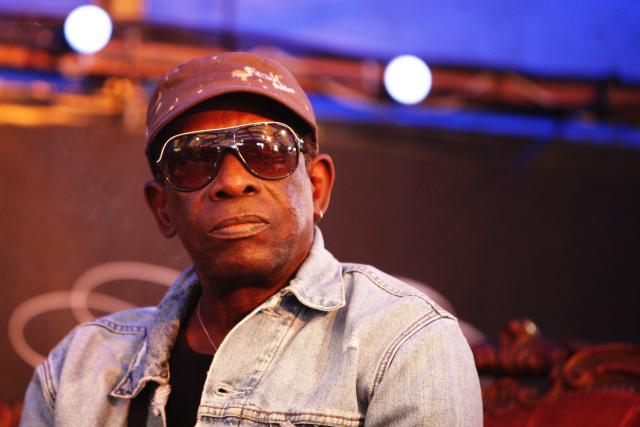
Tony Allen's influence extends to many contemporary artists. In 2000, Blur referenced Allen in their single "Music is My Radar," with the lyrics "Tony Allen got me dancing." Allen worked with Damon Albarn from Blur and Flea from Red Hot Chili Peppers on the project "Rocketjuice and The Moon," releasing a collaborative album in 2012. Albarn and Allen also released the single "Go Back" in 2014, which became part of the album "Film of Life" released in October. Allen's drumming can be heard on Charlotte Gainsbourg's album "5:55," Air's music video "Once Upon a Time," and Zap Mama's albums "Supermoon" and "ReCreation."


