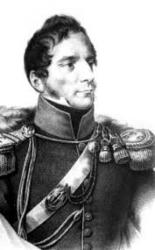
Topias Huttari
- Early Life and Education
- Pedagogical Career and Arrival in Karelia
- Literary Career
- Editorial Work and Poetry
- Union of Soviet Writers and Repression
- Military Service and Later Life
- Personal Life
Early Life and Education
Toivo Huttari, a Soviet-Karelian poet, prose writer, translator, and educator, was born in 1907 in the Ingermanland Governorate to a family of Ingermanland Finns. As the youngest son in a large peasant family, he spent his childhood in the village of Muya.
In 1921, Huttari completed rural school and enrolled in the Gatchina Finnish Pedagogical College, which trained teachers for Finnish schools.
Pedagogical Career and Arrival in Karelia
In 1924, following a Komsomol call, Huttari moved to Petrozavodsk to teach literacy to Karelian children. He worked as a teacher of Finnish language and literature in rural schools (1924-1927) and in Petrozavodsk (1927-1929).
Literary Career
In 1927, the literary and artistic journal "Soihtu" ("The Torch") began publication in Leningrad, featuring works by Karelian authors. Huttari began publishing short stories and lyrical poems under the pseudonym Lea Heelo.
Editorial Work and Poetry
In the 1930s, Huttari edited the Leningrad-based Finnish-language journal "Punakantele" ("The Red Kantele"). He also published collections such as "Young Hearts" and "I Step Over." He wrote several books for children, including "How the Book Was Born" and "Paper Grows in the Forests of Karelia."
Union of Soviet Writers and Repression
In 1934, Huttari joined the Union of Soviet Writers. However, in 1937, he was expelled from the Union of Writers of Karelia. He narrowly escaped repression during the Great Purge.
Military Service and Later Life
Despite suffering from tuberculosis, Huttari worked on the construction of defensive structures during the early days of World War II. In 1941, he was sent to the front lines on the Karelian Front. He continued to write, publishing patriotic, lyrical, and satirical poems that were translated into Russian.
Huttari was transferred to a rear newspaper in 1942 after a decision by the State Defense Committee to remove all Finns from the front lines.
In 1948, Huttari settled in a house on Volkhonskaya Street in Petrozavodsk, where he lived until his death in December 1953. The house still stands today.
Personal Life
Huttari was married to Elina Pekki, a folklorist and writer, sister of Alexander Pekki.