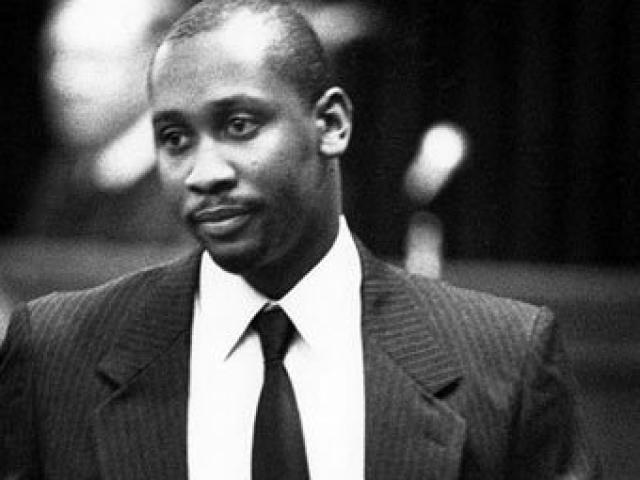
Troy Anthony Davis
 USA
USA- Troy Anthony Davis: A Biography
- Legal Battle and Controversial Execution
- Doubts on Davis' Guilt
- Views of the Victim's Family
Troy Anthony Davis: A Biography
Troy Anthony Davis was an American citizen who was convicted of the murder of police officer Mark MacPhail on August 19, 1989, in Savannah. He was executed on September 21 in Georgia after being found guilty of the crime committed in 1989. The sentence was initially imposed in 1991, but its execution was repeatedly postponed. Protests against the execution took place in the United States, with participants demanding its repeal. They argued that there was insufficient evidence to prove Davis' guilt. Opponents of the death penalty included Pope Benedict XVI, former US President Jimmy Carter, and UN human rights experts.
Legal Battle and Controversial Execution
Davis' plea for clemency was rejected on September 20, along with the request from his lawyer to subject him to a polygraph test. However, the gathering of people outside the prison in Jackson, where the sentence was to be carried out, continued to hold onto hope. Among the hundreds of people present, mostly opponents of the death penalty, was Davis' sister. Some of the protesters were located in a nearby church. While the activists behaved peacefully, they were monitored by over 100 police officers.
The execution was initially scheduled for 7:00 PM local time but was delayed for several hours as the US Supreme Court reviewed another appeal. The appeal was ultimately denied. Davis received a lethal injection, and his death was declared on September 21 at 11:08 PM local time. The events were so grim that even staunch supporters of the death penalty began to question the system. Until the very end, Davis did not believe he would be executed. In previous years, in 2007 and twice in 2008, Davis had been given execution dates, only for them to be postponed. In October 2008, the US Supreme Court canceled the execution just two hours before it was due to be carried out. In 2009, the Supreme Court ordered a review of the case, but a judge in Savannah ruled that there were no grounds to overturn the jury's decision.
Doubts on Davis' Guilt
Davis could have received a special meal given to death row inmates before execution, but he requested regular prison food, insisting that it was not his last meal. After being strapped to the gurney where the execution was to take place, Davis lifted his head and addressed the family of the deceased officer. According to witnesses present at the execution, Davis once again declared his innocence, stating that he did not kill MacPhail and did not have a weapon at the time. He called for further investigation into the case, trying to speak quickly as the lethal injection was about to be administered.
The execution of Davis was condemned by the Council of Europe, France, Germany, and Amnesty International. According to Amnesty International, Davis' execution "shook the foundations" of the US justice system. The main focus of Davis' supporters was the fact that seven out of nine witnesses who testified against him later recanted their statements or provided contradictory ones. The murder weapon was never found. There were suspicions that the initial witness statements were given under police pressure. It was even argued that another person confessed to the crime, although the court considered it hearsay and did not take it into account. Opponents of the death penalty believed that Davis had become a victim of the police's desire to quickly find someone responsible for their colleague's death. Racial bias was also suspected, as Davis was African American.
Views of the Victim's Family
However, the family of the slain police officer had a different perspective on the matter. Mark MacPhail's mother, Anneliese MacPhail, expressed relief after the execution. According to her, justice had been served, and those participating in the protest actions simply did not understand the essence of the case and only focused on the execution itself. She believed that 99 percent of the protesters did not know who Troy Davis was or who Mark MacPhail had been. Indeed, Davis had been found guilty not only of the murder of the police officer but also of another assault in Savannah in 1989. According to the prosecution, he shot Michael Cooper in the face and assaulted a homeless man with the butt of a gun in a store. When Mark MacPhail, who was off-duty and working as a security guard nearby, attempted to intervene, Davis shot him. In 1988, Davis, then 20 years old, had already been fined for carrying a weapon.
Regarding witness testimony, discussions on the reliability of eyewitnesses have been intensifying in the United States in recent years. Cases where evidence of innocence emerges many years after a person has been sentenced to death based on eyewitness testimony do occur.


