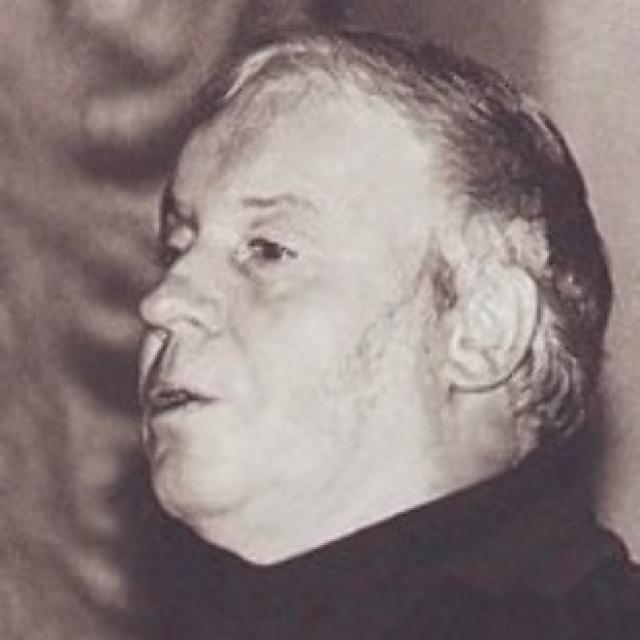
Uldis Brauns
 Latvia
- Early Life and Education
- Career at Riga Film Studio
- Acclaimed Documentaries
- Foray into Feature Film
- Recognition and Legacy
Early Life and Education
Uldis Brauns was born on December 19, 1932, in Lutriņu Parish, Latvia, into a farming family. He graduated from the Saldus Zooveterinary College in 1953 and pursued his filmmaking studies in Moscow at the All-Russian State Institute of Cinematography (VGIK) under the tutelage of Leonid Kosmatov (1959). He also attended the Higher Directing Courses in 1968.
Career at Riga Film Studio
In 1961, Brauns began working as a cinematographer and documentary filmmaker at the Riga Film Studio. His debut documentary, "White Bells" (1961), received accolades at film festivals in Moscow, Oberhausen, and San Francisco (1963).
Acclaimed Documentaries
Brauns became known for his poetic and thought-provoking documentaries. His 1967 film "235,000,000" explored the contrast between the life of an individual and the grand scale of the Soviet nation, earning critical acclaim and an award at the All-Union Film Festival (1968). He also created dynamic reportage films, such as his coverage of the Prague Hockey Championship in 1972.
Foray into Feature Film
In 1975, Brauns directed his only feature film, "Motorcycle Summer," a road movie that became a rare youth manifesto in Soviet cinema, capturing the spirit of the late 1960s and early 1970s.
Recognition and Legacy
Brauns was a member of the Union of Cinematographers (1962) and was honored as a Merited Artist of the Latvian SSR (1982). He also published a photo album, "Zeme atceras" (1989). In 2008, a documentary about Brauns, titled "Uldis Brauns," was produced by director Agris Redovič as part of the "Cinema Century of Latvia" series.


