Umida Ahmedova
 Uzbekistan
Biography of Umida Akhmedova
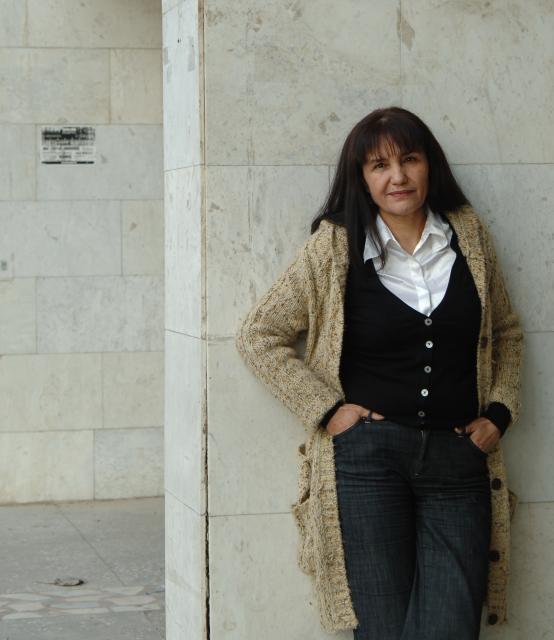
Umida Akhmedova is an Uzbek film documentarian and photographer, as well as a member of the Union of Cinematographers of Uzbekistan and the National Academy of Arts. She completed her education in photography and filmmaking at the Vladimir Cultural Enlightenment College and the All-Union State Institute of Cinematography (VGIK) in 1986. After working as a video operator at "Uzkinochronika," she began her professional career in photography.
Works and Recognition
Umida Akhmedova is well-known for her photo album "Women and Men: From Dawn to Dusk," published in 2007, and the documentary film "The Burden of Virginity," released in 2008. She has participated in exhibitions across Europe and the former USSR, including personal exhibitions in various cities of Uzbekistan (such as Fergana, "Stories at the Crossroads," 2008), Copenhagen (2006), Nizhny Novgorod (2010), Rostov-on-Don (2010), and Tbilisi.
Akhmedova has received several awards, including the winner of the "Press Photo Russia-2004" competition in the category of "Contemporary Photography of Central Asia" and a silver medal at the photo contest commemorating the 40th anniversary of Victory in Moscow (1985).
Persecution and Support
In December 2009, the Uzbekistan government initiated legal proceedings against Umida Akhmedova, related to her professional activities. According to the accusations, her works allegedly insulted the Uzbek people and their traditions, creating a negative image of Uzbekistan. Her photo album "Women and Men: From Dawn to Dusk" focuses on life in rural areas of the country and Uzbek traditions with an emphasis on gender inequality. Her film "The Burden of Virginity" explores the issues of preserving a bride's virginity until marriage and the attitudes towards it in Uzbek families.
Despite the charges, many individuals from Uzbekistan's social and artistic circles, as well as international human rights organizations, voiced their support for Akhmedova. An open letter was sent to the Ministry of Foreign Affairs and the Ministry of Internal Affairs of Uzbekistan, demanding the cessation of persecution against the photographer and categorizing her prosecution and trial as an attack on art as a whole. Holly Cartner, the director of the Europe and Central Asia division of Human Rights Watch, stated that "the criminal case against Akhmedova illustrates the absurd lengths to which the government is willing to go to suppress independent viewpoints" and demanded that she be allowed to work peacefully, exercising her right to freedom of expression without state interference. Protests in her support were held outside the Uzbekistan embassies in Moscow and Paris.
Umida Akhmedova herself states that her work primarily focuses on the life of the people from an ethnographic perspective. She captures folk rituals, traditions, and weddings.
On January 13, 2010, Umida Akhmedova was charged with defamation and insult under Articles 139 and 140 of the Criminal Code of Uzbekistan. On February 10, 2010, she was found guilty, but due to an amnesty related to the anniversary of Uzbekistan's independence, she was released in the courtroom. According to Akhmedova and her representatives, they will seek a review of the guilty verdict. Her husband, Oleg Karpov, is a filmmaker and the director of the Uzbekistan Film Museum. They have three children.